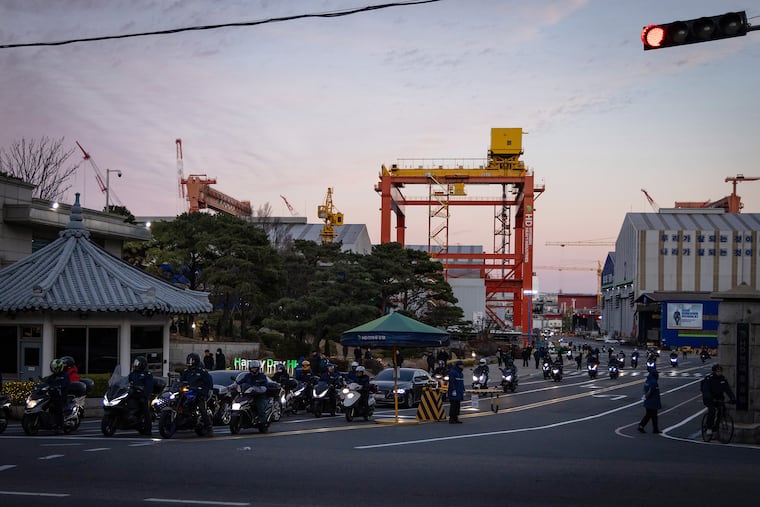
South Koreans are avoiding risky shipbuilding jobs that are highly sought after in the industry.
South Korea’s shipbuilding industry, lauded as a benchmark for efficiency and productivity, faces a troubling reality that complicates its relationship with the United States, especially as the Biden administration seeks to revitalize domestic manufacturing. Despite South Korean President Lee Jae Myung’s assurances to support the revival of American shipbuilding, the sector is increasingly reliant on low-paid migrant labor and grapples with an alarming safety record.
As the landscape of shipbuilding has evolved, it has become evident that the jobs it offers come with substantial dangers. South Korea’s nationwide occupational fatality rate stands at nearly four deaths per 100,000 workers, a figure that rises drastically in the shipbuilding sector. Official data indicates that the fatalities from shipbuilding mishaps are more than four times the national average. This grim statistic not only underscores the hazardous conditions within these facilities but also drives skilled South Korean workers away from such positions, creating a growing dependence on foreign labor to meet production demands.
As of April 2025, more than 23,000 migrant workers are employed in South Korea’s shipyards, a number that has surged due to eased government restrictions on foreign labor. These workers occupy a significant portion of the workforce in this industry, often relegated to positions that South Korean nationals are increasingly avoiding. This reliance on migrant labor is deeply intertwined with the ongoing discourse about the sustainability of the shipbuilding model being proposed to the United States. Critics question the viability of transferring this system to the U.S., given its deeply ingrained labor issues and differing regulatory environments.
Although South Korea’s shipyards are recognized for their rapid output and competitive pricing, there is rising concern about the long-term implications of such practices. Analysts note that the productivity admired by Washington is upheld by a workforce that operates under duress and limited rights. For instance, situations involving visa restrictions and precarious employment conditions have left many migrant workers vulnerable. This dynamic raises alarms regarding the potential exportation of these labor practices to the U.S., where labor regulations are typically more stringent.
Moreover, the defense and security implications of this sector cannot be overlooked. The South Korean government’s ambitions in military shipbuilding, including plans for nuclear-powered submarines, have created an intricate link between defense policy and manufacturing capabilities. As the geopolitical landscape shifts, the stakes are elevated, especially in light of emerging tensions related to trade and labor rights.
In navigating these complex issues, South Korea risks perpetuating a problematic labor model that may undermine both domestic industry growth and international competitiveness. Experts argue that failure to address worker rights not only harms migrant laborers but endangers the overall trajectory of South Korean shipbuilding. In an era where global standards increasingly emphasize ethical labor practices, ignoring these fundamentals could hinder exports and damage reputations.
The future of South Korea’s shipbuilding industry, and its relationship with the United States, thus rests on striking a balance between maintaining high productivity and ensuring fair labor conditions. As policymakers move forward, the scrutiny on these labor practices will intensify, ultimately shaping both domestic manufacturing policies and international trade negotiations.