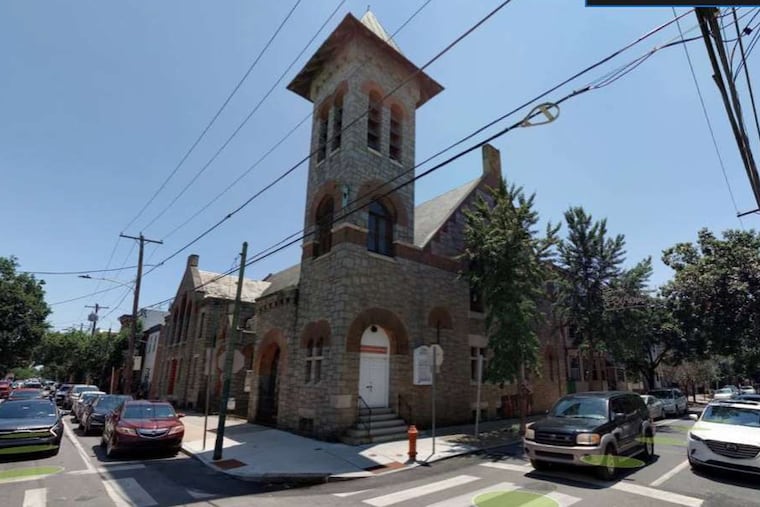
St. John’s Baptist Church to be converted into apartments at 13th and Tasker streets.
In a notable development within Philadelphia’s urban landscape, the historic St. John’s Baptist Church located at the intersection of 13th and Tasker Streets is set to undergo a significant transformation into residential apartments. The project aims to create 26 rental units within the church, which has been vacant since its closure. Originally constructed in 1892, the church has been recognized for its architectural significance and was added to the local Register of Historic Places in 2020, following a nomination by the Preservation Alliance of Greater Philadelphia.
The redevelopment is made possible by the 2019 legislative measure passed by the City Council, designed to facilitate the preservation and adaptive reuse of large historic structures, including churches. This law, championed by District Councilmember Mark Squilla, allows for the conversion of properties historically designated as “special use” into new residential uses, regardless of their underlying zoning restrictions, thus ensuring that such buildings can be repurposed while maintaining their historical integrity.
The project is being developed by Annex Investments II, a company owned by Drew Palmer. The architectural design is being handled by Philadelphia-based Toner Architects. Current zoning regulations classify the church site for single-family residential use; however, the adaptive reuse law eases the pathway for transforming such properties into multi-unit housing.
The Architectural Committee of the Historical Commission recently conducted a preliminary review of the proposed plans, which include adding additional floors and large dormers to enhance natural light and improve the living conditions of future residents. However, the committee expressed concerns regarding the potential impact of these exterior modifications on the building’s historical character. Members highlighted that the size of the dormers could appear excessively prominent on this particular structure, given its smaller scale compared to other buildings where similar enhancements were made.
Despite the pushback, the committee acknowledged the significance of repurposing historic churches for modern use, citing the societal benefits of revitalizing these community landmarks. While the committee did not indicate how it would ultimately vote on the project, they emphasized the importance of finding a design solution that balances the new requirements with the original architectural features.
The project reflects a broader trend toward adaptive reuse within Philadelphia, aiming to preserve landmarks while simultaneously addressing the city’s increasing housing demand. This redevelopment initiative underscores the ongoing dialogue between historical preservation and contemporary urban development, illustrating a commitment to revitalizing the community while honoring its architectural heritage.
As the project progresses, stakeholders will continue to assess the balance between renovation and historical preservation, creating a model for future endeavors that seek to breathe new life into vacant historic properties across the city.