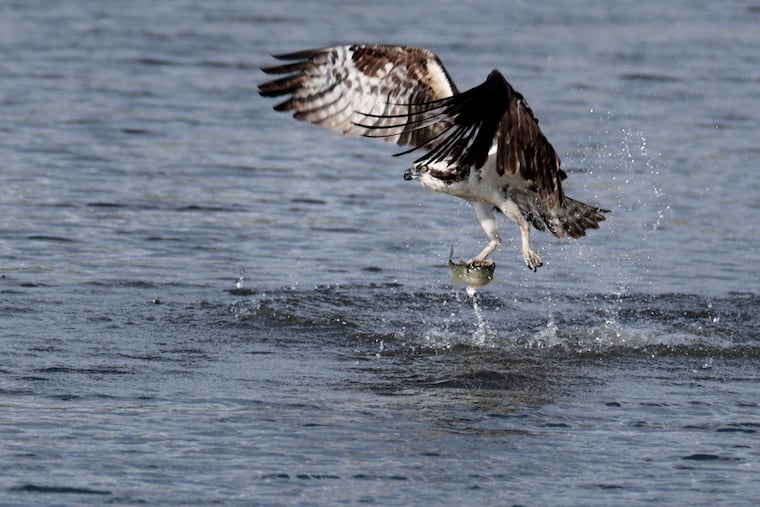
Study shows Osprey chicks at the Jersey Shore are starving due to environmental challenges.
A recent study conducted by Stockton University has raised significant concerns regarding the status of the osprey, a bird widely regarded as an icon of New Jersey’s coastal ecosystems. Historically classified as “threatened,” ospreys were recently reclassified as “stable” by the state’s Department of Environmental Protection; however, alarming findings along the Mullica River and Great Bay suggest that this evaluation may be premature.
During the 2023 monitoring season, faculty and biology students from Stockton University observed 27 osprey nests in the aforementioned regions. Their findings revealed a stark decline in chick survival rates. Early in the season, a total of 54 eggs and only three chicks were recorded during the first survey conducted in May. By September, the situation had deteriorated dramatically, with only nine fledged chicks remaining, highlighting an alarming loss of approximately 85% in chick survival.
The implications of these findings have prompted concern among environmental scientists and local conservationists alike. Experts indicate that the decline in nest productivity is not limited to this specific area; conversely, it reflects a broader trend observed not only throughout New Jersey but along significant portions of the East Coast. This marks a troubling turnaround for a population that had been steadily recovering for the past five decades.
Previous assessments by the Conserve Wildlife Foundation of New Jersey corroborate these concerns, revealing that 2023 represented one of the steepest declines in osprey nest productivity in recent history, with over half of the active nests failing to produce young. Factors contributing to this decline have yet to be definitively identified, but researchers have pointed to fluctuations in food supply as a potential causal agent.
Central to this dietary discussion is the declining availability of the Atlantic menhaden, a crucial dietary staple for ospreys, which are now reportedly substituting it with flounder—an alternative that offers fewer nutrients. This switch underscores the pressing ecological issue at hand: as ospreys expend more energy hunting for less calorically dense prey, their ability to rear healthy young diminishes significantly.
Menhaden are recognized as a keystone species in coastal regions, serving as a vital food source for numerous aquatic and avian predators. The commercial harvesting of menhaden for various industries has led to calls from conservationists for reduced catch limits, arguing that a substantial cut in menhaden harvesting could benefit not only ospreys but other species reliant on this fish as well.
Adding to the complexity of the situation, New Jersey’s previous reclassification of the osprey population took place against the backdrop of historical declines attributed to pesticide use, which had seen numbers plummet to just 50 active nests in the 1970s. Current data reflecting approximately 800 nests by 2023 paints a picture of recovery, yet the recent revelations from Stockton’s research indicate a precarious future for these birds, particularly as aging adults may no longer be able to compensate for dwindling reproductive success.
In conclusion, the future of the osprey population in New Jersey hangs in the balance, as factors influencing their survival and breeding productivity continue to evolve. The findings presented by Stockton University underscore the urgent need for ongoing monitoring and potential conservation measures to ensure the stability of this iconic species along the Jersey Shore waterways.