
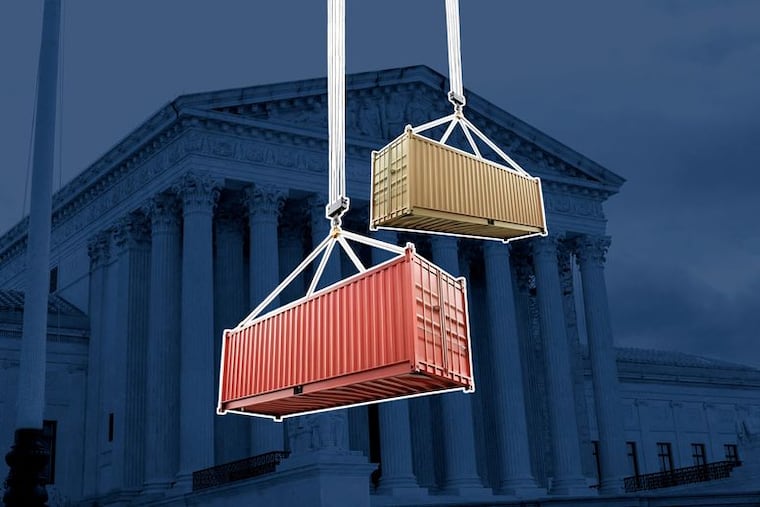
Supreme Court expresses skepticism about Trump’s tariffs, highlighting that only Congress can resolve the ongoing trade issues.
The ongoing debate surrounding tariffs levied by former President Donald Trump is once again in the spotlight as the Supreme Court considers challenges to their legality. Chief Justice John Roberts has emphasized that tariffs fundamentally operate as taxes. Despite the government’s argument that exporters or importers might initially absorb these costs, it is consumers who ultimately bear the burden. This shift in financial responsibility has already begun to manifest in the marketplace.
On Wednesday, members of the Supreme Court voiced skepticism regarding Trump’s authority to impose such tariffs indiscriminately, particularly through the use of the International Emergency Economic Powers Act. This legal framework permits trade regulation in the context of extraordinary threats but raises questions when applied to the economic policies of a sitting president. If the Court rules against Trump, it may mitigate the unpredictable application of a policy that many experts warn may adversely affect the American economy.
Congress faces a critical juncture, having the opportunity to reassert its control over fiscal policy and curtail what has been described as “tariff chaos.” Predictability is essential for business operations, yet the administration’s inconsistent tariff rollout has introduced volatility that hinders effective planning for production costs and future investments. Business owners, like Walt Rowen of Susquehanna Glass Co. in Pennsylvania, have articulated frustration over the inability to provide stable pricing to customers, which undermines their capacity to operate sustainably.
Recent surveys from Small Business for America’s Future reveal that approximately 78% of small-business owners anticipate that tariffs will increase their costs for imported goods. Consequently, 71% of those surveyed expect to raise prices to counteract these expenses, a potential burden for consumers already facing economic tightness. Industries particularly reliant on imports—such as automotive, electronics, and furniture—are already seeing marked price increases, as detailed in a report by the Federal Reserve Bank of St. Louis.
While dire predictions of a recession connected to these tariffs have yet to materialize completely, some economic indicators continue to trend negatively. The latest jobs report indicated a significant deceleration in hiring, and recent data shows a rise in layoffs, reminiscent of economic conditions during the pandemic and the Great Recession. Conversely, inflation refuses to relent, maintaining upward pressure on consumer prices.
The Supreme Court’s role in this scenario is not to direct the economy but rather to uphold the Constitution, which assigns the power of taxation and trade regulation to Congress. Legislative action is crucial in addressing the unpredictability and potential economic fallout stemming from Trump’s tariff policies. Although the legal landscape may shift, and Trump’s economic strategies remain focused on tariffs, it is the responsibility of Congress to safeguard the interests of the American public. Should Congress fail to act decisively, voters in the upcoming elections will hold the ultimate power to demand accountability and change.
It is imperative that lawmakers rise to the occasion and protect their constituents from policies that threaten financial stability, a crucial step for a resilient economic future.
Media News Source


