Supreme Court hears arguments on challenge to Trump’s birthright citizenship policy.
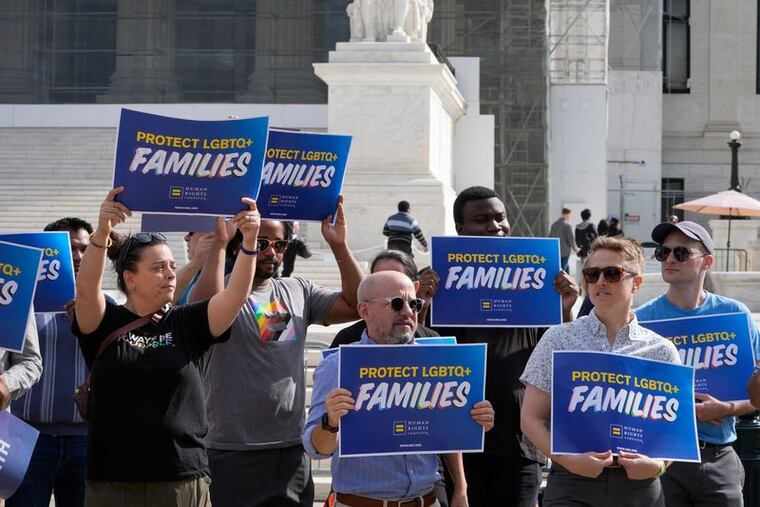
On Thursday, the Supreme Court convened to deliberate on a controversial initiative by former President Donald Trump aimed at terminating birthright citizenship, a concept that has been established as fundamental law for over 150 years, rooted in the 14th Amendment of the United States Constitution. This amendment notably guarantees citizenship to anyone born on U.S. soil, irrespective of their parents’ immigration status.
The conservative majority on the court appeared to exhibit skepticism towards Trump’s attempts to dismantle this long-standing principle. During the proceedings, Justice Elena Kagan characterized the administration’s argument as fundamentally flawed, suggesting that the legal basis for revoking birthright citizenship might be unlawful.
Despite their hesitation concerning the birthright citizenship issue, the justices expressed a more favorable disposition towards the Trump administration’s concerns regarding nationwide injunctions. These injunctions, issued by federal judges, have effectively stalled numerous executive orders from the White House, limiting the administration’s ability to implement its policy agenda.
The Supreme Court did not render an immediate decision; however, a ruling is anticipated by the conclusion of the current term, scheduled for July 1. Trump’s executive order, enacted shortly after his inauguration in January 2025, sought to prevent government officials from recognizing children of undocumented immigrants as U.S. citizens, thereby challenging the premise of birthright citizenship.
Legal challenges to this executive order were swiftly initiated by immigrant rights advocates, who successfully obtained injunctions from several federal district judges, hindering the Trump administration’s policy advancement. The Department of Justice has since appealed these rulings, positing that the 14th Amendment was historically intended solely for the offspring of recently freed slaves.
In social media statements, Trump has questioned the applicability of birthright citizenship, asserting that it should not extend to individuals who enter the United States under dubious circumstances, particularly undocumented immigrants.
The principle of birthright citizenship, enshrined in the post-Civil War 14th Amendment, has been upheld multiple times by the Supreme Court. The legal text states that “all persons born or naturalized in the United States, and subject to the jurisdiction thereof, are citizens of the United States and of the state wherein they reside.” This language seems to explicitly encompass children born in the U.S. to undocumented immigrants.
In addition to the birthright citizenship debate, the Supreme Court is being asked to curtail what the administration has criticized as overreaching “universal injunctions,” which enable individual judges to halt presidential actions on a national scale. Proponents of these injunctions argue that such judicial powers are necessary to protect citizens from executive overreach.
Justice Ketanji Brown Jackson highlighted concerns that limiting judicial authority could transform the legal system into a disjointed framework, where only those who engage in lawsuits benefit from favorable judgments. Birthright citizenship is just one of several contentious issues confronting the court, alongside the administration’s appeals regarding temporary protective status for approximately 850,000 individuals from countries such as Cuba, Haiti, Nicaragua, and Venezuela, which could expose them to potential deportation.
The implications of this case extend beyond birthright citizenship itself, encasing it within a broader narrative concerning executive authority and judicial power in the United States. Media News Source expects the forthcoming judicial decisions to play a pivotal role in shaping the nation’s immigration policies and the definition of citizenship in a rapidly evolving political landscape.