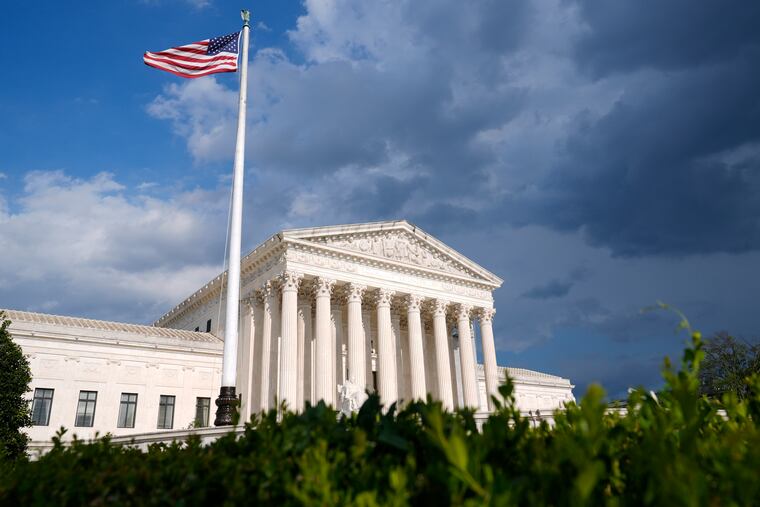
Supreme Court tie vote results in defeat for taxpayer-funded Catholic charter school in Oklahoma.
On Thursday, the Supreme Court effectively nullified a publicly funded Catholic charter school in Oklahoma, resulting in a 4-4 deadlock among the justices. This impasse leaves in place a previous decision from an Oklahoma court that had invalidated the state charter school board’s approval of the St. Isidore of Seville Catholic Virtual School. If permitted, this institution would have marked the nation’s first religious charter school, but the ruling leaves unanswered questions about similar initiatives across the country.
The Supreme Court’s announcement was brief and did not clarify the individual votes of the justices. During previous arguments, it appeared that four conservative justices were inclined to support the Catholic charter, while their three liberal counterparts opposed it. The significance of this case was heightened by the absence of Justice Amy Coney Barrett, who refrained from participating in the deliberations. Justice Barrett has ties to Notre Dame law professor Nicole Garnett, who acted as an advisor for the proposed school.
The implications of this decision are substantial, as the Catholic Church in Oklahoma sought funding from taxpayers to support an online charter school that would prioritize teachings aligned with Christianity. Opponents of the school argued that its establishment could undermine the separation between church and state, divert crucial resources from public education, and potentially alter existing regulations governing charter schools in many states.
The case gained attention amidst a broader trend, particularly in conservative-led states, toward integrating religious tenets into public schooling. Notable examples include the ongoing legal battles in Louisiana over a mandate for Ten Commandments displays in classrooms and Oklahoma’s directive to place Bibles in public school environments.
St. Isidore, intended for K-12 education, had aspirations to commence operations with an initial enrollment of 200 students last fall and aimed to provide instruction consistent with Catholic doctrine. A central question stemming from this case is the classification of charter schools, traditionally categorized as public entities in Oklahoma and the 45 other states that allow such institutions.
Charter schools operate independently, free from local school district governance, while still being open to all students and subject to state funding and oversight requirements. As the debate continues, the Supreme Court may revisit such cases in the future, with the potential for a more definitive ruling that could shape the landscape of education in the United States.