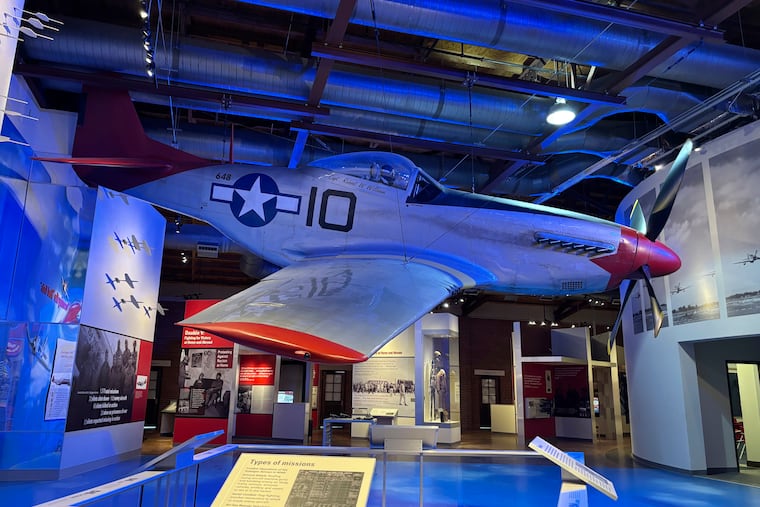
This summer marks the 80th anniversary of Black troops from Philadelphia leading the fight to integrate the military.
During World War II, the Tuskegee Airmen emerged as the first African American military pilots, renowned for their exceptional service in protecting bombers from enemy fighters. However, their contributions extended beyond aerial combat; they played a pivotal role in advocating for the integration of the U.S. armed forces and set a precedent for civil disobedience that resonates with contemporary activists. Notably, a significant number of these pioneering aviators hailed from Philadelphia.
In mid-1943, the U.S. Army established the all-Black 477th Bombardment Group, a comprehensive training program that encompassed pilots, navigators, bombardiers, gunners, and ground personnel. This initiative took place against a backdrop of racial segregation within the military. Although officer classroom training was integrated, lodging facilities largely remained segregated, particularly affecting Black officers within the Army Air Forces.
While Army policy mandated that officers’ clubs be accessible to all officers, numerous base commanders continued to enforce segregation, creating tensions among Black officers. In 1944, training for the 477th began at Selfridge Field, Michigan, where African American officers faced denial of access to the officers’ club. This incident prompted a response from Major General Frank O. Hunter, who oversaw the training. He publicly reiterated segregationist views, asserting that social mixing between white and Black officers would not be tolerated.
Responding to this discrimination, Pentagon officials relocated the 477th to Godman Field in Kentucky, where Black officers experienced unimpeded access to the officers’ club—as white officers chose to move to a segregated club nearby. However, Godman Field proved inadequate for the comprehensive training of the 477th. Consequently, the unit was transferred to Freeman Field in Indiana in March 1945.
Upon arrival, Col. Robert Selway Jr., the unit’s commander, established two officers’ clubs, one designated for white supervisors and trainers, and the other for the Black personnel in training. This blatant segregation provoked resistance among Black officers. In early April 1945, a group, led by 2nd Lt. Roger “Bill” Terry, staged a protest by demanding service in the supervisors’ club, mirroring later civil rights sit-ins.
This act of defiance, known as the Freeman Field mutiny, led to the arrest of over 400 Black officers who refused to acknowledge the illegitimate dual club system. Remarkably, 101 officers, including several from Philadelphia, notably Argonne F. Harden, Frederick H. Samuels, and Eugene L. Woodson, resisted the order to sign compliance forms.
Despite the subsequent arrests and attempts to discipline those involved, the mutiny garnered significant attention from the African American press and the NAACP. Following intervention from high-ranking military officials, the arrested officers were released, albeit with their records noted for insubordination.
The actions of these brave Tuskegee Airmen not only challenged entrenched military racism but also echoed through history as a catalyst for future social movements. Col. Benjamin O. Davis Jr., a prominent leader among the Tuskegee Airmen, was appointed following the turmoil as a key figure in the ongoing fight for equality within the armed forces.
Although the 477th Bombardment Group did not engage in combat due to the war’s end shortly after the events at Freeman Field, the unit’s resistance against racial discrimination remains a critical narrative in America’s ongoing struggle for civil rights and social equity. The legacies of these pioneering individuals continue to inspire new generations in their pursuit of equality and justice.
Media News Source