
Threats to immigrant workers pose risks to all workers and the communities reliant on their contributions.
Recent actions by U.S. Immigration and Customs Enforcement (ICE) agents in South Philadelphia’s Mifflin Square Park have sparked widespread concern within immigrant communities. The arrest of several immigrant construction workers has underscored the pervasive fear that influences the daily lives of those who contribute significantly to the functioning of American cities. This situation serves as a stark reminder of the vulnerabilities faced by immigrant workers, particularly in high-demand sectors such as construction and domestic work.
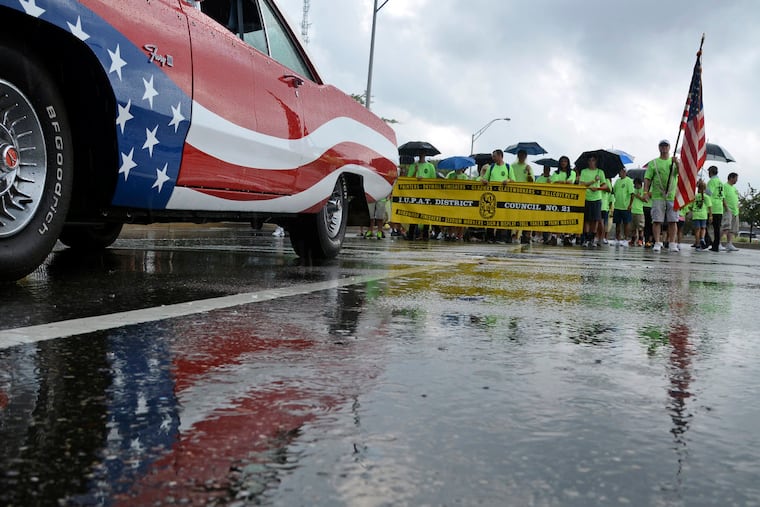
In response to these challenges, organizations such as the Pennsylvania chapter of the National Domestic Workers Alliance and the International Union of Painters and Allied Trades District Council 21 have formed a collaborative effort aimed at advocating for immigrant workers. These organizations have been mobilizing to educate both workers and policymakers about the specific challenges faced by immigrants in the workforce. Many believe that the welfare of immigrant workers is intrinsically linked to the broader labor movement, emphasizing that substandard working conditions or exploitation experienced by these workers ultimately affect all laborers.
The construction and domestic work sectors may appear disparate, yet both industries operate similarly within the shadows of the underground economy, where misclassification and wage theft are prevalent issues. As immigrant workers navigate these treacherous waters, they often find their immigration status weaponized against them, resulting in a continual state of fear and anxiety.
Amidst this climate, the implications extend beyond the immigrant population alone. When home care providers are afraid, families are left without the necessary support for elderly relatives. When childcare workers are threatened, parents lack reliable options for their children’s care. Furthermore, when construction workers face exploitation, it leads to unsafe working conditions and, ultimately, impacts community infrastructure.
The statistics surrounding these issues are sobering. Industries that employ a significant number of immigrant workers are seeing an increase in incidents of threatened deportation, decreased hourly wages, and diminished workplace safety standards. Such conditions have a ripple effect that harms everyone, demonstrating that the struggle for immigrant rights is fundamentally a struggle for universal worker protections.
As labor laws come under increasing scrutiny, it is essential for unions and immigrant rights organizations to work in concert. The labor movement’s principle — that an injury to one is an injury to all — is more critical now than ever. The tacit acceptance of wage theft and exploitation against immigrant populations could foreshadow a broader erosion of rights for all workers, including those with legal status.
The urgency is clear. Local governments must strengthen and enforce worker protection laws amidst aggressive lobbying from business interests that aim to weaken these safeguards. For progress to advance, labor unions must unite with immigrant advocacy groups, ensuring that dignity and safety in the workplace is a right granted to every worker, regardless of their immigration status.
The forthcoming era demands collaborative efforts to safeguard the rights and livelihoods of all workers. Addressing these challenges fortifies the core of a just and equitable labor landscape that remains integral to America’s demographic and economic vitality.


