Three firefighters dead and two injured while battling wildfires near the Colorado-Utah border.
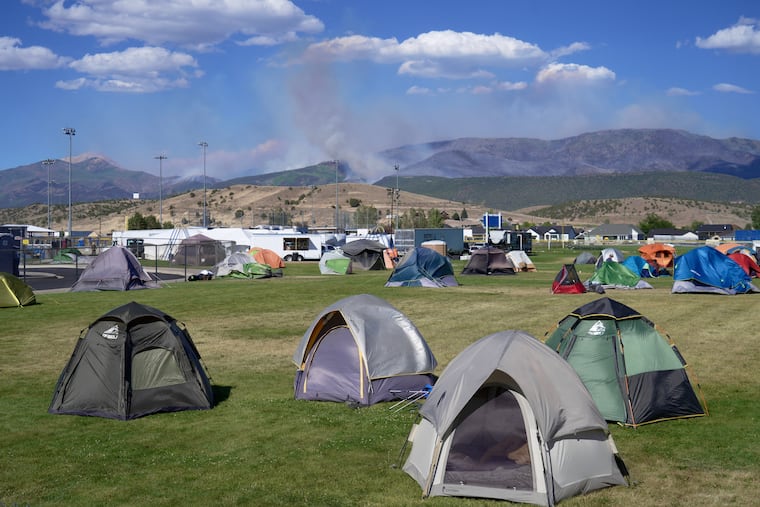
Three firefighters tragically lost their lives and two others sustained burn injuries while combating fast-spreading wildfires near the Colorado-Utah border. This devastating incident occurred on a Saturday in Mesa County, Colorado, under perilous conditions characterized by high temperatures and strong winds, as confirmed by the U.S. Interior Department.
The deceased firefighters were part of the U.S. Wildland Fire Service and the U.S. Forest Service, actively engaged in firefighting efforts related to the Knowles and Gore fires, which subsequently merged into a larger conflagration known as the Snyder Fire. To date, these wildfires have consumed approximately 44 square miles. On that day, temperatures in nearby Grand Junction peaked at 93 degrees Fahrenheit, accompanied by wind gusts reaching 44 mph, according to the National Weather Service.
A statement from the U.S. Wildland Fire Service expressed solidarity with the Forest Service, extending heartfelt condolences to the families affected by this tragedy. The organization noted the bravery and sacrifice displayed by the firefighters, emphasizing that their contributions would not be forgotten.
While the names of the fallen firefighters are being withheld pending notification of their families, local authorities initiated evacuations in areas threatened by the wildfire. The Mesa County Sheriff’s Office also encouraged residents to activate irrigation systems in an effort to mitigate the fire’s spread. Moreover, the Bureau of Land Management has closed off public access to certain lands it oversees as a precautionary measure, citing the rapid rate of the fire’s advance and its dangerous behavior.
Wildfire activity has surged across the western United States, spurred by extended periods of hot, dry, and windy weather conditions. Significant blazes have emerged in Utah and Arizona, with the Cottonwood Fire in southwest Utah becoming particularly notable, having expanded to more than 144 square miles. This fire has impacted local infrastructure, including part of a ski resort and various summer cabins.
Beaver County is currently collaborating with fire containment teams to assess damages, though definitive estimates remain unavailable. Governor Spencer Cox of Utah has publicly acknowledged the severity of the situation and commended fire crews for their efforts under challenging circumstances.
The persistent dry conditions are exacerbated by Utah’s record-low snowpack and higher-than-average winter temperatures, effectively setting the stage for what experts describe as one of the most severe wildfire seasons in recent history. Nationally, nearly three million acres have burned so far this year, exceeding the decade’s average.
In response to the ongoing crisis, both Utah and Colorado’s governors have declared states of emergency, facilitating the mobilization of the National Guard and imposing restrictions on activities such as fireworks ahead of the impending Fourth of July holiday.
As wildfires continue to pose significant risks, the National Weather Service has issued red flag warnings across various regions, underscoring the importance of community vigilance and safety as conditions remain precarious.
Local utility companies have also initiated power shutoffs in certain areas to minimize wildfire risks, a measure that has become increasingly common as fire danger escalates. This operational decision reflects the ongoing challenges faced by communities in the West as they grapple with the growing threat of wildfires in an environment characterized by extreme heat and dried-out landscapes.
Media News Source