
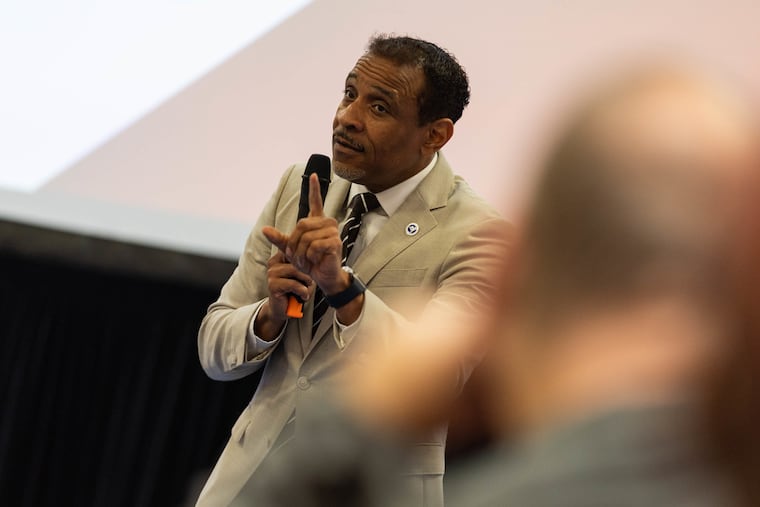
Tony Watlington highlights Philadelphia’s significant academic progress in a national address, sharing three key insights.
Recent discussions at the Council of Great City Schools annual conference in Philadelphia have highlighted the School District of Philadelphia’s efforts to achieve noteworthy academic improvements under the leadership of Superintendent Tony B. Watlington Sr. As the eighth-largest school district in the United States, Philadelphia’s progress is a focal point for educational leaders from some of the nation’s largest urban school systems, including those from Baltimore, Detroit, and Los Angeles.
Superintendent Watlington has emphasized the strides made since he took the helm in 2022, marking improvements across several key educational metrics. Among the reported advancements are reductions in dropout rates, enhancements in graduation rates, and increased student and teacher attendance. The district’s performance, as indicated by standardized assessments such as the “Nation’s Report Card,” has also shown a positive trajectory. Watlington has expressed pride in the district’s accelerated performance and aims for Philadelphia to climb to the forefront of educational excellence.
During the conference, Watlington shared that significant attention has been directed toward improving reading and math skills for fourth and eighth graders. Recent data indicates that 25% of district students meet state standards in reading, while 33% do so in mathematics, with fourth-graders showcasing a notable 13 percentage point rise in math scores over the past three years. However, despite these advancements, challenges remain, particularly for a student body predominantly composed of economically disadvantaged children and children of color.
The district’s recent history reflects a stark turnaround. After previously languishing near the bottom in performance rankings among large urban districts, the most recent data from the National Assessment of Educational Progress indicates that Philadelphia has made considerable gains. Additionally, the district has reversed a trend of declining enrollment, adding over 1,000 students to its roster last year. Key strategies contributing to this growth include the adoption of a standardized curriculum, professional development for educators, and a stronger focus on partnerships with families to enhance instruction.
During the conference, leaders from Baltimore and Los Angeles also shared insights into their school systems. Baltimore’s Superintendent Sonja Santelises reported on the effectiveness of empowering teachers and paraprofessionals to take leadership roles, particularly in literacy education. In Los Angeles, Superintendent Alberto Carvalho underscored the necessity of prioritizing resources toward the district’s lowest-performing schools, calling for equitable funding based on students’ needs.
As educational leaders reflect on these shared experiences, the overarching message is clear: systemic improvements in urban education require unwavering commitment and innovative strategies that focus on equity and access. As cities like Philadelphia set ambitious goals for the future, ongoing efforts will determine whether they can sustain momentum and continue to elevate student achievement on a larger scale.
Media News Source.


