
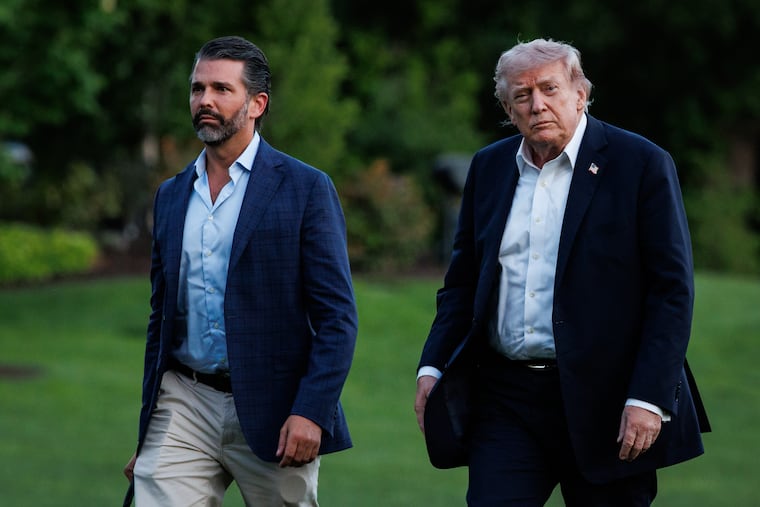
Trump and his sons make significant investments in the AI sector while rejecting suggestions to slow down their business activities.
In recent analyses, President Donald Trump’s extensive business operations have revealed close connections to the burgeoning field of artificial intelligence (AI). Investigation into his financial disclosures and corporate activities indicates that his administration has embraced rapid advancements in AI technology even as concerns regarding its implications arise. Factors contributing to this alignment include Trump’s relationships with prominent tech executives and investors advocating for accelerated AI development. Notable figures such as Nvidia CEO Jensen Huang and venture capitalist David Sacks have influenced his stance, aligning with the President’s apprehensions about falling behind China technologically.
The intersection of Trump’s personal investments and the AI realm raises potential ethical questions, as he has not transferred his assets into a blind trust, which is a practice typically followed by recent presidents to avoid conflicts of interest. Trump continues to actively trade stocks, which include significant holdings in companies essential to the AI infrastructure, such as Dell Technologies and Micron Technology. His financial disclosures indicate nearly 30,000 securities transactions since his re-election, further underscoring the growing overlap between his financial interests and the government’s regulatory environment regarding AI.
Amidst these concerns, Trump’s White House has maintained a position denying any conflicts of interest, asserting that his investments are managed independently. Despite this, observers note that no recent president has engaged in business practices quite like Trump’s, which prompts serious questions about the motivations governing his decisions related to AI regulation and investment.
While growing calls for AI oversight mount among lawmakers and technology leaders—as voiced by prominent figures like Elon Musk—Trump has proposed minimal regulatory frameworks. His recent public statements reflect a belief that strong leadership is all that is necessary to guide the AI industry, which many find insufficient given the rapid advancements in AI capabilities.
With the market’s current volatility influenced by AI-related developments, Trump’s financial fortunes remain closely tied to the sectors advancing this technology. Recent stock fluctuations, particularly declines in companies supplying AI infrastructure, highlight the precarious nature of investments aligned with his political agenda. Additionally, his family’s burgeoning interests in AI-related ventures—including a sister company merging with a nuclear fusion entity focused on powering AI data centers—signal a deeper entrenchment of personal wealth and technology-driven policies at the federal level.
As the AI landscape continues to evolve rapidly, the implications for President Trump’s financial interests, alongside the broader economic and ethical concerns surrounding technology regulation, will likely provoke continued scrutiny ahead of the upcoming midterm elections. Concerns expressed by the American public regarding the pace of AI development emphasize the need for a balanced approach to innovation and governance in this crucial area of economic growth.


