
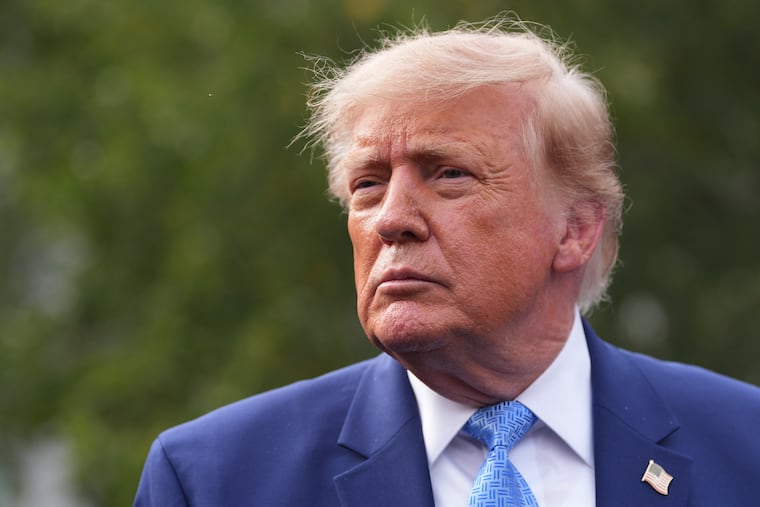
President Donald Trump has announced the establishment of a new task force, referred to as the “Super Intelligence Force,” aimed at coordinating the federal response to the rapidly evolving field of artificial intelligence (AI). The initiative is expected to engage various stakeholders—including technology companies, public interest groups, and consumers—amid growing concerns about the risks associated with AI technologies.
The task force will be led by several prominent figures in the Trump administration: Jay Clayton, the Director of National Intelligence; Andrew Ferguson, Chairman of the Federal Trade Commission; Scott Kupor, Director of the Office of Personnel Management; and Emil Michael, Undersecretary of War for Research and Engineering. In a statement posted on Truth Social, Trump expressed that the task force’s mission is to ensure that the United States maintains its leadership in AI, which he believes is comparable to the Industrial Revolution in its potential impact on society.
The launch of this task force represents a significant step in the Trump administration’s effort to address public apprehensions regarding AI’s advancement. Despite the concerns expressed by some industry leaders about the rapid pace of AI development, Trump has largely portrayed the technology as a catalyst for economic growth rather than a threat.
In recent months, the Trump administration has seen a shift in terminology regarding AI. The president initially proposed an “AI Force,” reminiscent of the Space Force established during his first term. However, he has since sought to rebrand the initiative as “super intelligence,” directing federal agencies to adopt this new nomenclature.
The task force leaders come from varied backgrounds, reflecting different interests within the administration. Clayton’s appointment underscores the intelligence community’s desire for greater oversight in evaluating AI models, particularly in light of sophisticated cybersecurity threats posed by emerging technologies. Ferguson leads an agency that has long acted as a regulatory body for technology, and the FTC has recently initiated an investigation into the safety of AI systems developed by leading companies, including Anthropic and OpenAI.
Kupor brings substantial experience from the venture capital sector, where he has supported AI developments and understands the competitive landscape, particularly in relation to China’s technological advancements. Meanwhile, Michael’s background includes efforts at the Department of Defense in leveraging emerging technologies for military applications, amidst ongoing debates surrounding the role of AI in warfare.
Recently, Clayton, Ferguson, and Kupor participated in a White House meeting with prominent tech leaders, including Amazon founder Jeff Bezos. Following these discussions, Trump emphasized the need for the tech industry to engage in self-regulation. Leaders from major companies like Google, Meta, and OpenAI have reportedly agreed to a “morally binding” accord to institute internal controls and undergo external audits of their AI systems.
The Super Intelligence Force represents a multifaceted initiative aimed at addressing the complexities of artificial intelligence while balancing regulation and innovation in a fast-evolving technological landscape. Media News Source.