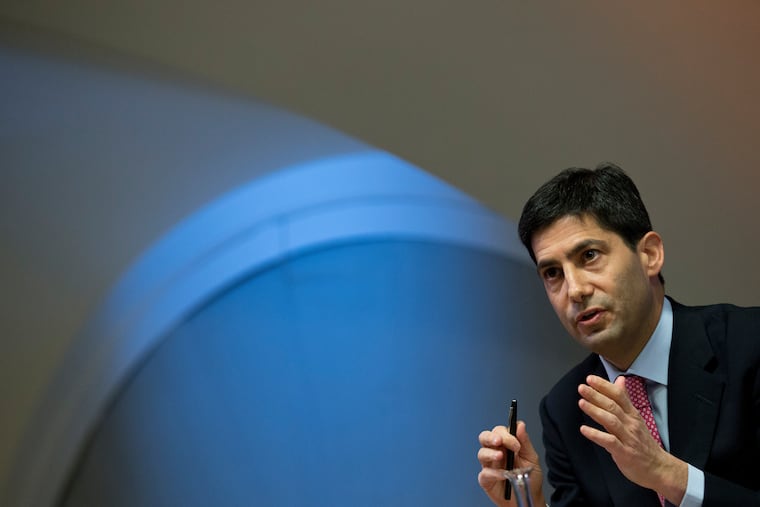
Trump anticipates his Federal Reserve nominee and AI advancements will replicate the 1990s economic boom, but economists express skepticism.
Assembling Economic Optimism: The Trump Administration’s Vision for AI and Productivity
In Washington, D.C., a new wave of economic strategy emerges from the Trump administration, which is placing significant faith in artificial intelligence (AI) to replicate the economic boom of the late 1990s. President Donald Trump, alongside his Treasury Secretary and his nominee for the Federal Reserve chair, aims to induce an economic resurgence reminiscent of the internet-fueled prosperity of that era. During the late 1990s, the U.S. economy experienced robust growth, decreasing unemployment rates, and controlled inflation, transforming the economic landscape.
The optimism centers around Kevin Warsh, who has been nominated to lead the Federal Reserve. The administration expresses confidence that Warsh can unlock substantial economic potential by abandoning what Trump perceives as the Fed’s overly cautious approach to interest rates. This strategy aims to stimulate the economy further. However, skepticism lingers among many economists, who point out that the economic environment today is fundamentally different from that of two decades ago.
Dario Perkins, an economist at TS Lombard, critiques the administration’s narrative, suggesting that it presents a skewed interpretation of the factors that stimulated the economic growth of the past. While historical parallels are being drawn, particularly to former Fed Chair Alan Greenspan, experts caution against oversimplification. The complexities of the current economic climate—characterized by different monetary policies, regulatory environments, and global trade conditions—may not allow for such direct comparisons.
The Trump administration, however, is convinced that advancements in AI technologies could herald another productivity boom. Secretary of the Treasury Scott Bessent has indicated that the current Fed leadership’s reluctance to lower interest rates may stifle economic growth. Echoing this, Trump has publicly criticized the present Fed Chair, Jerome Powell, advocating for a leadership shift that mirrors Greenspan’s lower-interest-rate strategy during the tech revolution.
Warsh, who previously served as a Fed governor and maintained a hawkish stance against inflation, appears to pivot in his approach to the implications of AI on productivity and interest rates. If AI can significantly enhance productivity, proponents argue, it could justify reducing interest rates and encourage investment. This vision rests on the hope of a widespread adoption of AI solutions transforming business operations and economic output in a manner that counterbalances inflationary pressures.
Historically, the late 1990s, under Greenspan’s tenure, revealed unusual economic dynamics where rising wages and stable inflation coexisted. This unique circumstance is viewed as a potential repeatable formula, though skeptics argue that multiple economic variables today, including increasing trade barriers and fiscal constraints due to mounting national debt, create a less favorable backdrop for such a resurgence.
As we progress into 2025, productivity stats are showing positive indicators, yet many economists assert that these improvements are not solely attributed to AI advancements. Some link them to post-pandemic automation efforts and investments made during labor shortages. The consensus remains divided, with some expressing caution about the timeframe required for AI to materially alter productivity trends in the economy.
The central challenge for future economic adherence to the success of the 1990s will be the careful calibration of interest rates in response to productivity improvements. Fed officials suggest that while productivity boosts can catalyze growth, they may not justify immediate cuts to interest rates. As the economic landscape evolves, the interplay of AI, productivity, and fiscal policy will continue to be a focal point of discussion and debate within the Federal Reserve and among economic strategists nationwide.
In conclusion, while the Trump administration advocates for an AI-driven economic revival, its success hinges on navigating a complex array of modern economic realities that differ markedly from those seen in the 1990s. The ultimate direction of U.S. monetary policy will play a crucial role in shaping the nation’s economic future.
Media News Source