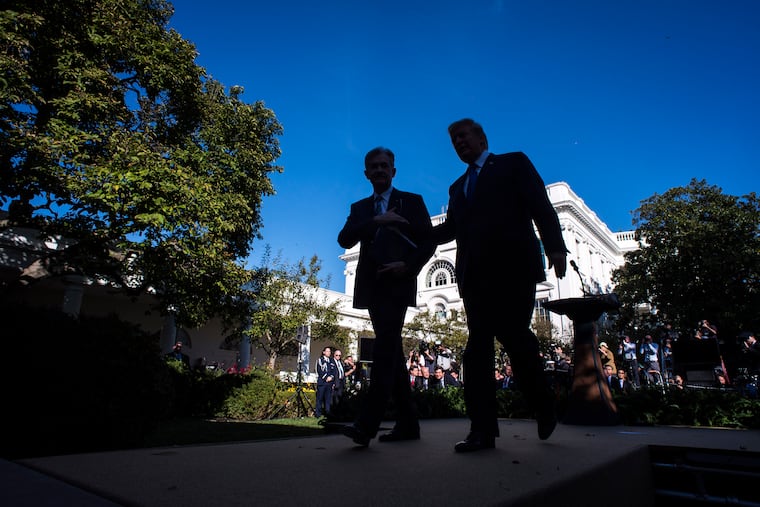
Trump Calls for Lower Interest Rates; Questions Arise on Federal Reserve’s Response Strategy.
President Donald Trump has intensified his call for the Federal Reserve to enact significant reductions in interest rates as a strategy to stimulate economic growth. His approach reflects a broader aim to assert influence over the Federal Reserve, with expectations that such actions may have unforeseen consequences.
Recent assessments indicate that the job market is exhibiting signs of softening, a development that has sparked considerable debate among economists regarding its underlying causes. Many attribute this slowdown to heightened uncertainties stemming from tariffs and the accelerating integration of artificial intelligence across various industries. The prevailing mindset of businesses, consumers, and investors is heavily swayed by their expectations of the economic landscape. Optimism typically leads to increased spending and hiring, while uncertainty tends to result in a more conservative approach.
Currently, businesses appear to be in a holding pattern, concerned about the implications of tariffs on future economic conditions. While there have been modest job gains, significant layoffs are not evident, implying that firms are hesitant to make bold hiring decisions until they gain clarity on economic trajectories. Concurrently, the rise of AI has also begun to reshape the workforce, reducing the demand for human labor—a trend that is poised to continue.
Experts suggest that to rejuvenate job creation, the ambiguity surrounding tariffs needs to be addressed. However, this challenge is complicated by the ongoing transition to AI, which suggests that a robust hiring environment may not materialize in the immediate future. The narrative surrounding high interest rates as the culprit for economic stagnation is contentious. Critics argue that a sharp decrease in rates could potentially exacerbate inflationary pressures, complicating the Federal Reserve’s dual mandate of fostering maximum employment while maintaining price stability.
The current national unemployment rate stands at approximately 4.3%, suggesting that the economy is operating near full employment. This level of employment, however, does not imply an absence of unemployment altogether, as transitions between jobs and skills mismatches continue to play a role in the job market.
Concerns about inflation have also risen, with current rates averaging around 2.5%, exceeding the Federal Reserve’s target of 2%. If inflation persists beyond this threshold, consumer behavior may shift, as individuals and businesses could hasten their purchases to avoid rising prices, thereby further fueling inflation.
In the context of tariffs, their influence on prices may not dissipate quickly as some argue. The magnitude of recent tariff increases poses a significant challenge, as businesses fearing backlash are likely to hesitate in passing on costs to consumers. This could result in protracted inflationary periods, lasting years, if not addressed immediately.
As the Federal Reserve contemplates a potential rate cut, concerns are mounting about the overarching implications. A move toward lower rates could inadvertently heighten perceptions of political influence over the Fed, risking its credibility as a politically independent institution. Observers warn that a politicized Federal Reserve may struggle to effectively combat inflation, with repercussions for long-term economic growth.
In conclusion, while there is pressure on the Federal Reserve to cut rates as early as September 17, such a decision must be made with caution. A judicious approach that balances the complexities of the current economic climate, inflationary risks, and the challenges posed by AI integration will be vital in guiding the economy toward a more stable recovery.
Media News Source