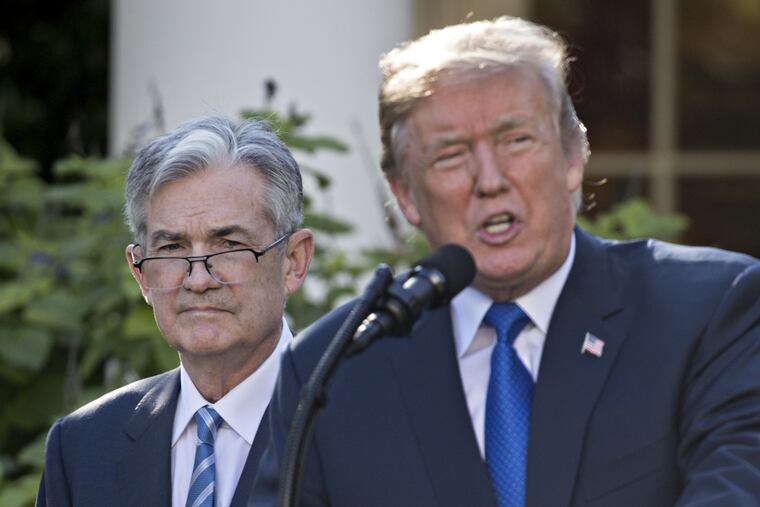
Trump criticizes Fed Chair Powell, highlighting the importance of maintaining Federal Reserve independence.
Tensions between President Donald Trump and Federal Reserve Chair Jerome Powell have escalated, raising concerns about the implications for the U.S. economy. Trump has expressed strong dissatisfaction with Powell, advocating for significant and rapid cuts to interest rates. In contrast, Powell and other members of the Federal Reserve have signaled a desire to maintain the current rates, at least in the short term. This fundamental disagreement has led Trump to contemplate the firing of Powell, a move that would challenge the traditionally independent status of the Federal Reserve.
The Federal Reserve, established over a century ago, was designed as an independent government agency aimed at delivering economic stability through strategic interest rate decisions. While its leadership is nominated by the President and confirmed by the Senate, the Fed operates outside direct presidential influence to ensure that monetary policy is dictated by economic indicators rather than political pressures. This autonomy is critical for fulfilling the Fed’s dual mandate: to maintain low and stable inflation while fostering a full-employment economy.
Historically, the Federal Reserve has successfully navigated the numerous financial crises that have plagued the U.S. economy before its founding. Under its stewardship, severe economic downturns have become less frequent and less debilitating. However, this era of independence has not been without complications. One notable exception occurred during the Nixon administration when the Fed, led by Chairman Arthur Burns, maintained low interest rates in an attempt to strengthen the economy ahead of the 1972 election. This short-sighted decision contributed to rampant inflation and economic turmoil in subsequent years.
If Trump were to undermine Powell’s authority, the precedent could jeopardize the Fed’s critical independence, leading to economic instability. Investors are already responding to uncertainty about the Fed’s future direction. Recent market reactions have seen short-term interest rates decrease as speculation grows about a more dovish successor to Powell, should he be replaced. Such conditions, however, can lead to increased long-term rates due to fears of inflation stemming from artificially low short-term rates. As a result, long-term borrowing costs—crucial for home mortgages and business investments—may rise, exacerbating financial challenges for American families and businesses alike.
Moreover, questions about the Fed’s credibility may weaken the value of the U.S. dollar, further complicating the economic landscape. As geopolitical tensions and trade disputes heighten, international investors may begin to view the U.S. economy as less stable, particularly if the Fed appears to operate under political duress rather than economic necessity.
Ultimately, preserving the Federal Reserve’s independence is vital for sustaining the economic robustness that has made the United States a global leader. Without this autonomy, the effectiveness of monetary policy could be severely hampered, potentially leading to adverse consequences for the broader economy. In these complex times, a balanced and independent Federal Reserve remains essential for ensuring long-term economic stability.
Media News Source