Trump officials connect COVID-19 vaccines to 25 child deaths, raising concerns among professional scientists.
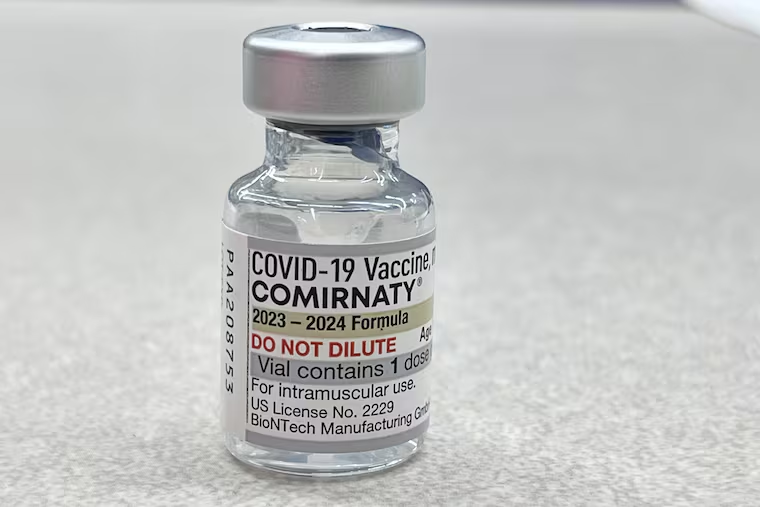
Health officials under the Trump administration are planning to present findings that link the deaths of 25 children to coronavirus vaccinations while deliberating on revised vaccine guidelines for Americans. This information, attributed to confidential sources, reveals a contentious approach to evaluating the safety of vaccines amid ongoing public health debates.
The findings are reportedly derived from reports submitted to the federal Vaccine Adverse Event Reporting System (VAERS), a registry that records unverified claims of vaccine-related side effects from various stakeholders, including healthcare professionals and the general public. While the Centers for Disease Control and Prevention (CDC) maintains that the VAERS database is not intended to ascertain causal relationships between vaccines and deaths, it remains a cornerstone of vaccine safety discussions.
Next week, Trump administration health officials plan to include the pediatric death claims in a presentation to the CDC’s Advisory Committee on Immunization Practices (ACIP). This meeting will significantly influence vaccine access, recommendations, and possibly the cost coverage provided by insurers.
Several career scientists have expressed alarm over this plan, arguing that extensive studies demonstrate the safety of coronavirus vaccines, particularly for children. They caution that the threat posed by the virus itself is being downplayed. In a presentation earlier this year, CDC staff cited that at least 25 children had died from COVID-19 after hospitalizations since July 2023. Many of these cases involved children not up-to-date on vaccinations.
Furthermore, Food and Drug Administration (FDA) Commissioner Marty Makary indicated that investigations into potential vaccine-related deaths are ongoing, involving reviews of autopsy reports and family interviews. The timeline for these investigations remains ambiguous, with some health officials noting that thorough reviews could take months.
The CDC’s upcoming deliberations are critical, as the decisions made could determine whether people aged 65-74 might receive recommendations to consult healthcare providers prior to vaccination, or if access would be restricted for individuals under 75 without pre-existing conditions. Such measures are reportedly at the center of political concerns, given that approximately 43% of the older population and 13% of children have already received the latest vaccine.
The international stance diverges on the recommendation for annual vaccinations for children, as many countries opt not to advocate for it due to the low mortality rates associated with COVID-19 among this demographic. U.S. health officials, however, argue that vaccines provide significant protection against severe illness and long COVID.
In a notable policy shift, Health and Human Services Secretary Robert F. Kennedy Jr. has directed a reduction of recommendations for healthy children regarding these vaccinations. This contrasts with the stance of the American Academy of Pediatrics, which continues to recommend annual vaccinations for young children.
The upcoming ACIP meeting is pivotal for the vaccine landscape, influencing both accessibility and insurer obligations. Recent changes in panel membership reflecting a critical stance on vaccination further complicate the discourse surrounding public health policy. Experts have called attention to potential misinformation related to vaccine safety and the inherent risks of the virus, underscoring the importance of robust scientific evaluation in the evolving COVID-19 vaccination strategy.
Overall, the current discourse on COVID-19 vaccinations, particularly among children, remains complex, laden with both scientific scrutiny and public concern. As health officials weigh the implications of their recommendations, the intersection of politics, public health, and scientific integrity calls for careful navigation in the ongoing pandemic response.
Media News Source