
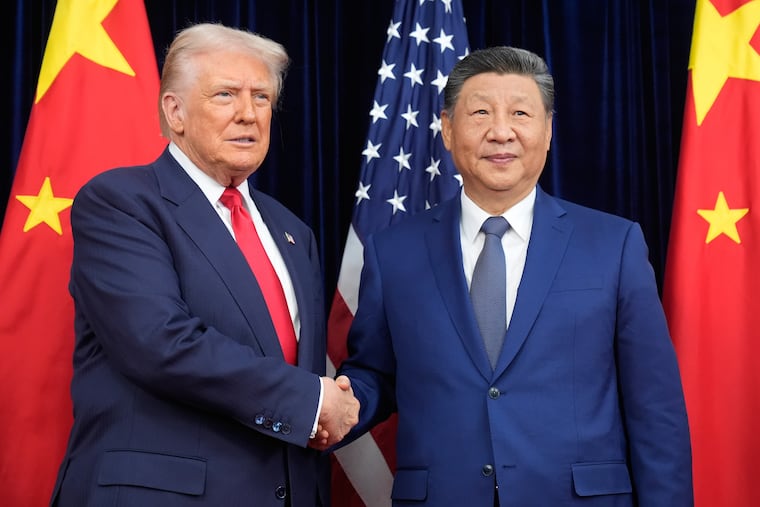
Trump reduces tariffs on China following discussions with Chinese leader Xi Jinping during a meeting in South Korea.
President Donald Trump characterized his recent meeting with Chinese leader Xi Jinping as a significant achievement, announcing plans to reduce tariffs on Chinese goods in exchange for China’s commitment to increase purchases of American soybeans and allow the export of rare earth elements. This engagement occurred aboard Air Force One shortly after the leaders’ face-to-face interaction in Busan, South Korea.
During this session, Trump revealed the United States would decrease tariffs, previously set at 20%, by half to 10%. This reduction is part of a broader adjustment of the cumulative tariff rate on Chinese products, which would now stand at 47%, down from 57%. Trump expressed high confidence in the productive nature of the discussions, rating the meeting as “a 12” on a scale of one to ten.
Treasury Secretary Scott Bessent elaborated on the implications of this agreement, indicating that China has pledged to import 25 million metric tons of U.S. soybeans over three years, starting with an immediate shipment of 12 million metric tons. The previous trade tensions had resulted in a significant decline in U.S. soybean exports to China, a critical market, with Trump’s administration previously accusing China of using these agricultural commodities as leverage in political maneuvering.
Plans for future diplomacy were also discussed, with Trump signifying his intention to visit China in April. Xi is expected to reciprocate by coming to the U.S. afterward. Both leaders noted the necessity of fostering stability in international relations, particularly amid the ongoing global uncertainties involving economic policy and emerging technologies such as artificial intelligence and semiconductor manufacturing.
Despite the apparent progress made during the meeting, the backdrop remains fraught with potential conflict, as both nations struggle for dominance in various sectors. Past aggressive tariff policies adopted by the Trump administration, coupled with China’s retaliatory measures regarding rare earth export restrictions, highlight the complicated nature of U.S.-China relations.
Although the recent dialogue may foster a sense of optimism among investors and businesses, it reflects a broader context of ongoing competition. The fluctuating tariff rates, alongside China’s strategic positioning in the rare earth market, underscore the fragile dynamics at play. Looking ahead, the outcomes of this meeting will be closely monitored as both leaders navigate a landscape characterized by mutual interests and underlying tensions.
As the geopolitical landscape continues to evolve, the leadership of both nations will need to balance cooperation with competition, ensuring that the efforts toward negotiations do not merely serve as temporary solutions but rather lay the groundwork for lasting engagement.


