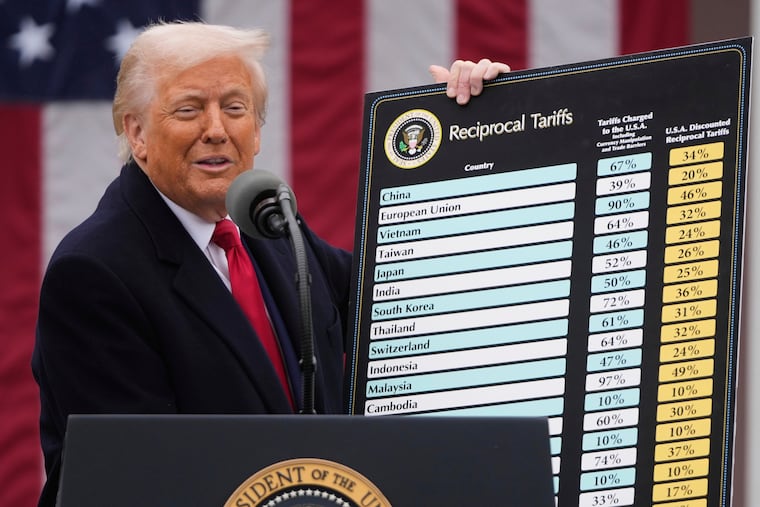
Trump’s 2025 Trade Policy Changes: Analyzing the Impact of New Tariffs Through Four Charts
Since his return to the White House in January, President Donald Trump has dramatically altered U.S. trade policy, introducing a series of tariffs that have effectively created significant barriers in what was previously a largely open economy. His administration’s decision to impose double-digit taxes on imports from a vast array of countries has not only reshaped global commerce but has also led to serious financial implications for consumers and businesses alike, both domestically and internationally. These tariffs have generated tens of billions of dollars for the U.S. Treasury, marking one of the most significant shifts in American trade policy in decades.
Trump has consistently maintained that these steep tariffs are essential for reclaiming wealth he claims has been “stolen” from the United States. The administration’s goal is to reduce the long-standing trade deficit and revive domestic manufacturing. However, the restructuring of the global supply chain has come at a high cost. Households are experiencing rising prices as businesses, faced with increased costs, often pass these expenses onto consumers, further straining budgets across the country.
The implementation of these tariffs has been marked by erratic announcements and unforeseen adjustments, contributing to a uniquely turbulent economic landscape throughout 2025. The fluctuations have generated uncertainty that many believe complicates the overall recovery following the pandemic.
Analyzing the impact of tariffs reveals significant insights into their effects on the economy. The effective U.S. tariff rate—representing an average based on actual imports—reached notable highs in 2025. For instance, various data sources show it peaked in April, substantially exceeding rates seen at the beginning of the year. In November, it stood at nearly 17%, marking an increase of seven times the January average and the highest rate observed since 1935.
Despite the substantial revenue generated, estimated at over 6 billion through November, these tariffs constitute a small fraction of total federal governmental revenue. They have not, as asserted by the Trump administration, replaced federal income taxes, nor have they provided enough funding for initiatives like proposed dividend checks for American citizens.
On the trade front, the country’s trade deficit has decreased since the beginning of the year. After peaking at 6.4 billion in March, it narrowed to .8 billion by September. However, year-to-date comparisons indicate that the deficit remains approximately 17% greater than in the first three quarters of 2024.
Trump’s tariffs have also profoundly affected trade relationships, particularly with China, which has dropped from the top source of U.S. imports to third place, following Canada and Mexico. Tariffs on Chinese goods now average 47.5%, according to analyses from the Peterson Institute for International Economics. While imports from China have plummeted nearly 25% during the first nine months of 2025, the United States has seen an increase in goods from Mexico, Vietnam, and Taiwan.
In financial markets, the volatility of President Trump’s tariff policies has mirrored some of the most dramatic movements within the stock market this year. The S&P 500, a key index of major U.S. companies, exhibited significant daily and weekly fluctuations, reflecting the broader economic uncertainty tied to these trade policies.
The ramifications of President Trump’s tariffs continue to unfold, illustrating the complexity and interconnectedness of global trade in an era of protectionism. Media News Source suggests that the long-term implications of this policy shift are yet to be fully realized, warranting ongoing scrutiny as the economic landscape evolves.