
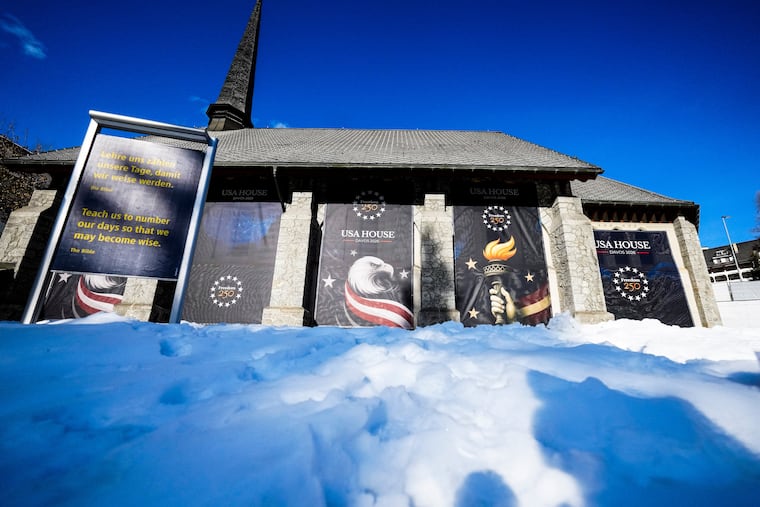
Trump’s Davos Visit Highlights a Shifting Global Landscape
In late January, the annual gathering of global leaders and economic influencers took place in the picturesque Swiss town of Davos, characterized by its sprawling forests and pristine snow-covered landscapes. The assembly drew a multitude of high-profile attendees, including heads of state, industry titans, and representatives from major international organizations. As private jets filled the nearby airfield and an array of luxury vehicles maneuvered through the icy streets, a notable transformation loomed in the background of this long-established forum.
This year’s World Economic Forum (WEF) was punctuated by the presence of President Donald Trump, who led one of the largest U.S. delegations in history. The backdrop of his administration’s confrontational stance, reflected in trade tensions and aggressive foreign policy maneuvers, seemed at odds with the forum’s traditional emphasis on globalization and cooperative dialogue. Trump’s forthcoming address at the summit came on the heels of his controversial threats to impose tariffs on European allies, following disputes about the U.S. interest in Greenland. The responses from European representatives expressed concerns that tariff threats could fracture transatlantic relationships further, hinting at potential adverse effects on international collaboration.
Analysts observed that Trump’s foreign policy marked a departure from established diplomatic norms, with some positing that the U.S. could be entering an era defined by a “might makes right” mentality. Observations from international policy experts emphasize a return to aggressive tactics, often reminiscent of past diplomatic confrontations, raising questions about the effectiveness of existing international frameworks.
While a palpable sense of uncertainty permeated the discussions at the WEF, its organizers attempted to foster a climate of cautious engagement, with the theme “a spirit of dialogue” guiding this year’s conversations. The event attracted a record number of attendees, including around 65 heads of state and nearly 2,000 business leaders, underscoring its continued significance despite the geopolitical shifts heralded by Trump’s presidency.
As dialogue progressed, stark economic disparities came to light, emphasized by an Oxfam report highlighting that billionaire wealth surpassed that of the bottom half of the global population. The WEF’s Global Risks report pointed to “geoeconomic confrontation” as the foremost concern moving forward, reflecting widespread apprehension regarding declining multilateralism under current international dynamics.
In the midst of these challenging narratives, leaders from various countries signaled a new approach to cooperation. Canada’s Prime Minister Mark Carney articulated the need for a recalibration of international relations, aiming for a renewed partnership with China amidst tensions with the U.S. In South America, a landmark free trade agreement was finalized between four countries and the European Union, showcasing the persistent push for economic collaboration.
As these developments unfold, experts envision a geopolitical landscape where the United States may find itself increasingly isolated from the collaborative frameworks that have historically defined global trade. The emerging alliances throughout the world can be perceived as a reaction to Trump’s distinct foreign policy, framing an evolving narrative of international relations that will likely influence economic and political strategies for years to come.
In this climate of change, the WEF serves as a critical platform for dialogue, albeit amid the complexities introduced by shifting power dynamics. Thus, the question remains whether cooperation can thrive amidst the disruptions and divergences that characterize current global interactions.
Media News Source


