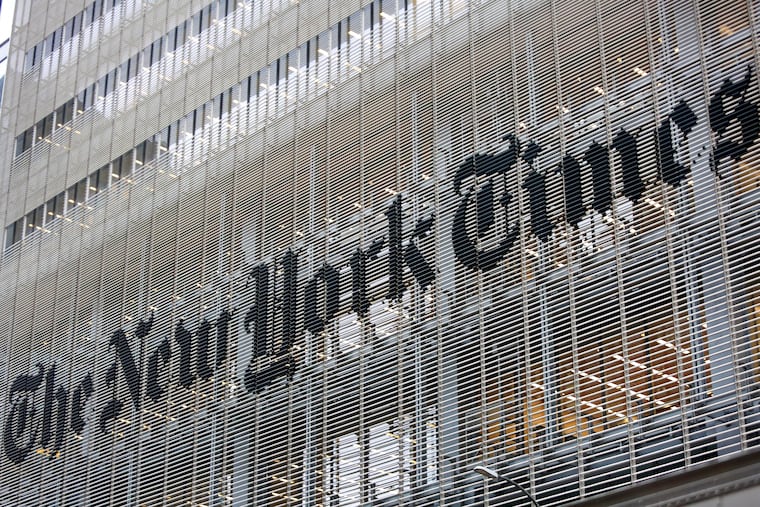
U.S. agency files lawsuit against New York Times for alleged discrimination against white male employee.
The Equal Employment Opportunity Commission (EEOC) has initiated legal action against the New York Times, claiming that the media organization violated federal law by overlooking a white male employee for a promotion in favor of a multiracial female candidate. This lawsuit, filed in a federal district court located in Lower Manhattan, centers on the promotion of an unnamed employee to the position of deputy real estate editor.
The EEOC’s Chairperson, Andrea Lucas, emphasized that no institution is exempt from accountability under the law, stating that all forms of discrimination, irrespective of the victims’ race or gender, are unlawful. According to Lucas, the federal law prohibits making hiring or promotional decisions based on race or sex, asserting that there are no exceptions for diversity, equity, and inclusion (DEI) initiatives.
The commission contends that the newspaper’s focus on DEI factors contributed to the alleged discriminatory practices that led to the denial of the promotion. Specifically, the EEOC claims that the Times’ prioritization of DEI was influenced by policies pursued during the Trump administration, including efforts aimed at dismantling such initiatives within workplaces.
In response to the allegations, a spokesperson for the New York Times, Danielle Rhoades Ha, rejected the claims as unfounded and politically charged. She expressed that the Times had followed appropriate procedures in the hiring process and maintained that the best qualified candidate was ultimately selected for the position in question. Rhoades Ha refuted any notion that race or gender influenced the decision-making process in hiring the new deputy real estate editor.
Interestingly, Kalpana Kotagal, the only Democratic member of the EEOC, dissented from the decision to authorize the lawsuit. She criticized it as potentially politically motivated, suggesting that the legal action might be aimed more at advancing an agenda rather than addressing actual civil rights violations. Kotagal indicated that simply having DEI policies in place does not automatically imply misconduct.
This lawsuit is part of a broader pattern of actions taken by the EEOC under the Trump administration, highlighting the ongoing tensions surrounding workplace equity policies. In prior cases, organizations such as Planned Parenthood of Illinois have settled EEOC investigations concerning discrimination against white employees, while Nike has faced scrutiny regarding its DEI practices.
The New York Times is familiar with litigation involving Trump, having previously taken legal action against the Defense Department over press policies that they deemed unconstitutional. As the government appeals that ruling, the ongoing legal disputes illustrate the complex interplay between civil rights, workplace policies, and political agendas in contemporary America.
Media News Source