
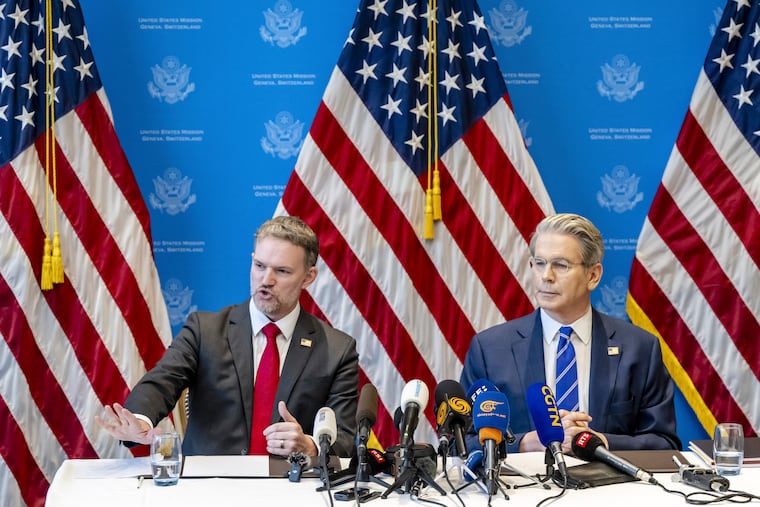
U.S. and China agree to a 90-day pause on tariffs to facilitate further negotiations.
U.S.-China Trade Negotiations Yield Significant Tariff Reductions Amid Ongoing Tensions
GENEVA — In a notable development in international trade relations, U.S. and Chinese officials announced a tentative agreement on Monday to rollback many of the recent tariffs imposed during their escalating trade conflict. This agreement marks a significant step towards de-escalation in what has been characterized as a contentious standoff between the world’s two largest economies.
Following the announcement, financial markets reacted positively, with a noticeable surge in stock prices reflecting investor optimism about the potential for improved trade relations. Economists, however, cautioned that despite the reductions, tariffs remain higher than previous levels and the long-term effectiveness of these negotiations remains uncertain.
U.S. Trade Representative Jamieson Greer confirmed that the U.S. has consented to reduce its tariff rate on Chinese goods from 145% to 30%. Conversely, China has agreed to lower its tariff on U.S. goods to 10%, effectively achieving a symmetrical reduction of 115 percentage points. This arrangement aims to facilitate further discussions over the next 90 days to address ongoing trade disputes.
Greer, alongside Treasury Secretary Scott Bessent, held a press conference in Geneva where they expressed a collaborative spirit. The officials emphasized the importance of continued dialogue to avoid a complete trade blockade, which neither side desires. Bessent noted that the previously high tariffs would have resulted in a significant disruption to trade flows, akin to an economic embargo.
The discussions culminated over two days at a historical villa in Geneva, where extensive negotiations took place. Both delegations spent considerable time connecting personally, indicating a desire to build stronger diplomatic ties in the pursuit of a comprehensive deal.
China’s Commerce Ministry endorsed the agreement, describing it as a vital step towards resolving the two nations’ differences and laying the groundwork for future cooperation. Furthermore, the ministry highlighted the importance of stabilizing the global economy amidst growing concerns over trade conflicts.
It is important to recognize that the broader implications of this agreement remain complex. While tariffs have been reduced significantly, they still represent a crucial barrier to trade. Future interactions between U.S. and Chinese officials are anticipated in the coming weeks to further negotiate and clarify outstanding issues.
Market analysts noted that the reduced tariffs have supported a rally in stock markets, with futures indicating notable gains. However, experts like Eswar Prasad from Cornell University underscored the necessity for sustained efforts to foster a more favorable economic environment. The agreement signals a positive, albeit cautious, shift in U.S.-China relations that could temper the adverse impacts on global trade and economic stability.
As both nations navigate these uncertain waters, the commitment to dialogue and negotiation may pave the way toward more lasting solutions to their longstanding trade tensions. The potential for a more balanced trade relationship could ultimately benefit both economies and mitigate risks to the global market landscape.
Media News Source


