
U.S. government halts five offshore wind projects along the East Coast.
The Trump administration has announced the immediate suspension of leases for five significant offshore wind projects under construction along the East Coast, citing national security concerns identified by the Pentagon. This decision marks a substantial shift in federal energy policy and reflects the administration’s ongoing efforts to curtail renewable energy initiatives.
The projects impacted by this suspension include the Vineyard Wind initiative in Massachusetts, Revolution Wind in Rhode Island and Connecticut, Coastal Virginia Offshore Wind, and two ventures in New York: Sunrise Wind and Empire Wind. The administration’s action comes as part of a broader strategy to impede the progress of offshore wind energy and follows a recent federal court ruling that declared a previous executive order by President Trump, which aimed at halting wind energy projects, as unlawful.
By halting these leases, the Interior Department stated that it will take the time to collaborate with the Defense Department and other relevant agencies to evaluate potential security risks associated with these offshore ventures. While the statement indicated that the suspension is a mere “pause,” it did not provide an end date or specific details regarding the identified national security risks, underscoring the ambiguity of the decision.
Critics of the administration’s move argue that it constitutes another attack on clean energy, alleging that the emphasis on potential security risks is overstated. Wind energy advocates assert that the projects in question had progressed through extensive consultation with various federal agencies, including the Coast Guard and the Air Force, prior to receiving their permits. These supporters contend that offshore wind projects contribute to national security by diversifying energy supplies and reducing reliance on fossil fuels.
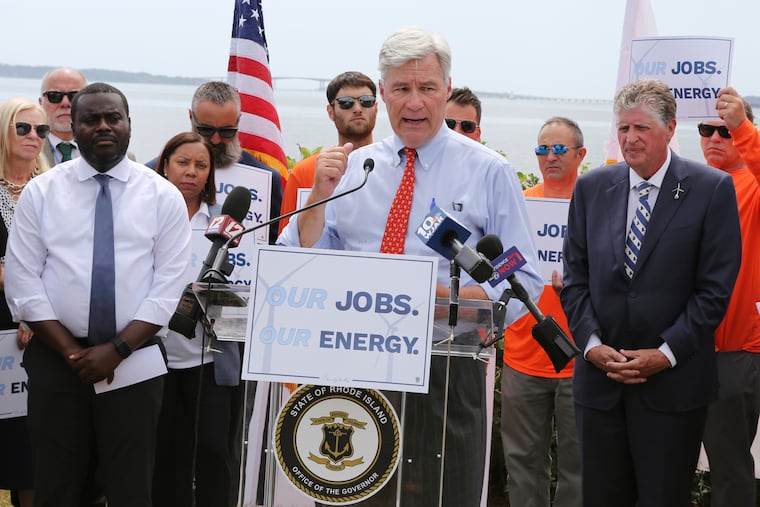
Senator Sheldon Whitehouse from Rhode Island condemned the administration’s actions, framing them as an unwarranted obstruction of a project that had already undergone rigorous federal scrutiny. Proponents of renewable energy have called the administration’s actions illegal and detrimental, particularly at a time when the demand for sustainable energy sources is on the rise.
Conversely, some opposition to offshore wind projects exists. Environmental groups like Protect Our Coast New Jersey have praised the administration’s suspension, arguing that foreign ownership of wind turbines poses a risk to national interests, especially due to their proximity to major airports.
The suspension highlights the ongoing contentious debate surrounding energy policy in the United States, illustrating the significant tension between advancing renewable energy and concerns related to national security and infrastructure protection. As this issue continues to evolve, the future of offshore wind projects remains in a precarious state, with legal challenges and political opposition expected to influence the trajectory of these initiatives.
In conclusion, the suspension of offshore wind project leases underlines a complex intersection of energy policy, national security, and environmental advocacy, with significant implications for the future of clean energy development in the United States.


