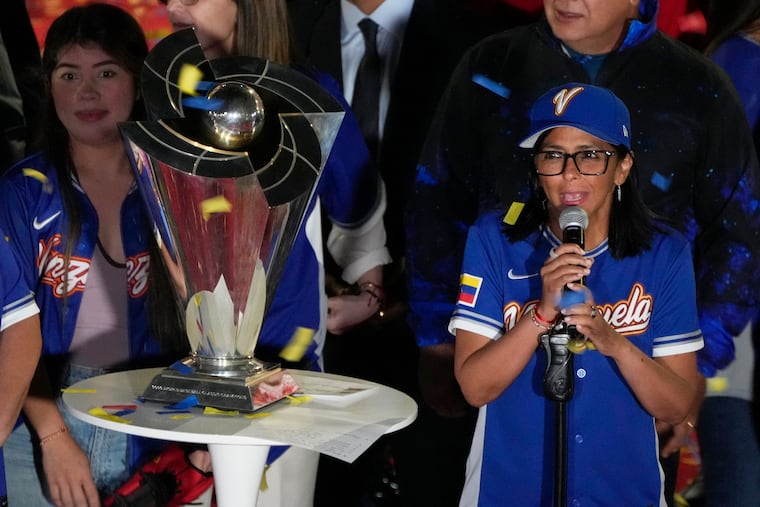
U.S. removes sanctions against Venezuela’s acting President Delcy Rodríguez.
In a significant shift in U.S.-Venezuela relations, the Biden administration has lifted sanctions on Delcy Rodríguez, the acting President of Venezuela, as detailed by an entry from the Office of Foreign Assets Control on the Treasury Department’s website. This development implies a formal acknowledgment from the U.S. of Rodríguez’s status as a legitimate authority following the recent capture of her predecessor, Nicolás Maduro, and his wife in Caracas on January 3. They are now facing drug trafficking charges in New York, where both have pleaded not guilty.
The relief from sanctions represents a noteworthy pivot in U.S. foreign policy toward Venezuela, signaling a willingness to engage with the nation under new leadership. Rodríguez and her brother, Jorge Rodríguez, were previously sanctioned in 2018 during the Trump administration. The sanctions were imposed due to allegations of complicity in undermining democratic processes in Venezuela, particularly following Maduro’s reelection in a vote marred by claims of fraud and the exclusion of opposition candidates.
Treasury officials had stated at the time that Maduro appointed Delcy Rodríguez and her brother to key positions in the government to help maintain his authoritarian grip on power. However, just months after Maduro’s ouster, Delcy Rodríguez has actively sought to promote Venezuelan oil resources to international investors, positioning the country for potential economic recovery through collaboration with the U.S. and other nations.
Despite the U.S. lifting sanctions, it is important to note that Nicolás Maduro maintains his role as the President of Venezuela. Following his removal from power, the country’s loyalist court classified his absence as “temporary,” allowing for an extension that could last up to six months, with oversight from a National Assembly dominated by his supporters. As the 90-day provisional governance period approaches its conclusion, the political landscape in Venezuela remains fraught with tension and uncertainty.
The situation reflects broader geopolitical dynamics, including the interplay between U.S. strategy and the evolving political frameworks within Latin America. The recognition of new leadership figures like Rodríguez may indicate a potential thawing in diplomatic relations, though the complexities of Venezuela’s internal politics continue to pose significant challenges. The outcome of these developments is yet to unfold as the nation navigates a path forward amidst economic strife and political upheaval.