
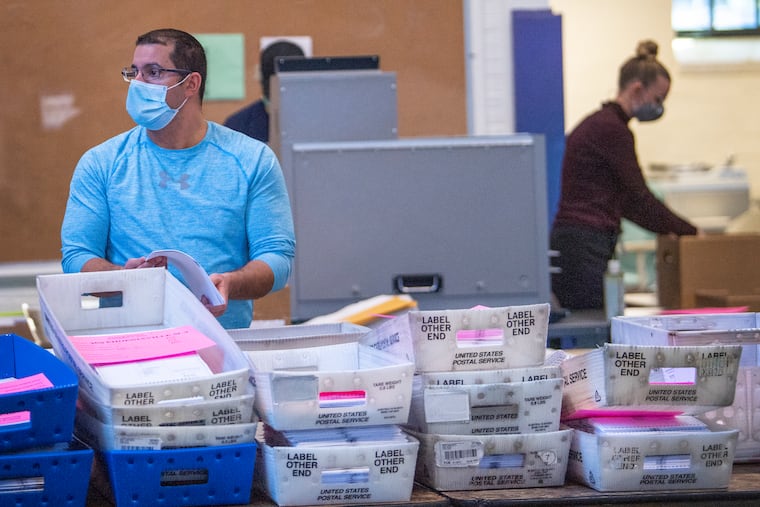
Unseen Volunteers Play Vital Role in Supporting Democracy
In the context of increased scrutiny over election integrity, the role of election officials has gained considerable attention. Al Schmidt, Pennsylvania’s Secretary of the Commonwealth, emphasized that these individuals are among the most crucial players in ensuring free and fair elections. However, despite the heightened interest in election security, the more than 45,000 volunteers working throughout Pennsylvania remain largely unnoticed, overshadowed by louder voices connected to false claims of voter fraud propagated by some political figures.
As confirmed by a recent report from the Brookings Institution, about half of all election officials have found it increasingly challenging to recruit sufficient poll workers. This ongoing shortage is mirrored across the United States. The demanding nature of the work—a typical day may span from 7 a.m. to 8 p.m., with some shifts reaching 16 hours—disincentivizes potential volunteers. In Philadelphia, poll workers can earn up to 5, while compensation varies significantly in other regions.
Moreover, Pennsylvania uniquely elects its poll workers. In an intricate process, local communities vote to appoint judges of elections and inspectors across approximately 1,700 divisions in Philadelphia alone. These judges subsequently appoint clerks, while city commissioners or election boards designate voting machine operators. This traditional, albeit convoluted method can sometimes lead to delays on election day.
In an effort to counteract the dwindling number of volunteers, Philadelphia’s City Commissioners, alongside election officials, recently organized a rally at City Hall. This event aimed to honor existing poll workers and attract new recruits, featuring pizza, pretzels, and water ice as incentives. Among the attendees was 17-year-old India Nakai, who expressed her enthusiasm for contributing to her community despite not yet being eligible to vote. Conversely, Gwendolyn Clay, a 74-year-old honored for her 51 years of service, exemplified longstanding commitment to civic duty.
The overall climate around election work reflects a broader societal trend, wherein participatory volunteerism is declining. Service organizations such as the Elks, Kiwanis, and various veterans’ organizations are witnessing reduced membership, while neighborhood churches often struggle with volunteer retention as they transition toward professional staffing models.
This decline is not merely restricted to poll work but extends to community engagement at large. The rise of online and social media platforms has bred a culture that often favors outrage over constructive dialogue. As communities grapple with polarization, collective actions for the common good have become increasingly difficult. Instances of societal division have intensified, as evidenced by the dwindling percentage of Americans satisfied with the direction of the country, which has plummeted from approximately 70 percent two decades ago to merely 25 percent today.
As individuals, the responsibility to foster community and counteract the trend of isolation and division rests with us. Addressing the staffing crisis in election administration is a vital first step, but fostering a culture of engagement and service is essential for rebuilding societal trust and achieving a cohesive democracy. Following the examples set by dedicated volunteers can pave the way toward a more united and service-oriented society.
Media News Source


