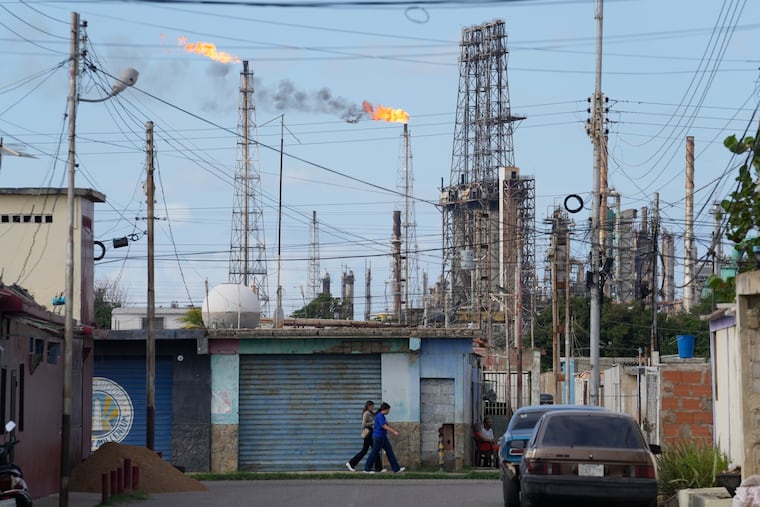
Venezuela initiates discussions on oil sector reform while U.S. firms seek involvement under Trump’s administration.
The Venezuelan National Assembly commenced discussions on a significant piece of legislation aimed at liberalizing the nation’s oil industry, a move that marks the first substantial shift from the policies implemented under former President Hugo Chávez since his nationalization of various oil sectors in 2007. The proposed bill, introduced on Thursday, seeks to attract private investment in the oil industry and establish mechanisms for international arbitration in cases of investment disputes.
In a context of entrenched economic challenges, the legislation represents a departure from Chávez’s resource nationalism, which perpetuated a narrative of protecting national assets from perceived exploitative multinational corporations. The newly proposed framework would permit private entities to operate oil fields independently, market their crude oil output, and retain cash revenues, while still being classified as minority partners of the state oil company. This strategic shift appears to be a direct response to pressures from U.S. oil executives, who have been encouraged by the Trump administration to invest in Venezuela’s beleaguered petroleum sector.
The draft legislation indicates that these private companies would bear full responsibility for managing operations, fortified by the ability to adjudicate disputes through international arbitration instead of relying solely on local courts. Importantly, the bill proposes to maintain the existing 30% royalty rate but offers the possibility of reducing it to as low as 15% for challenging projects, thereby incentivizing further investment in exploration and production.
As the debate unfolded, Jorge Rodríguez, the president of the National Assembly and acting President Delcy Rodríguez’s brother, articulated the bill’s intent to expedite an increase in oil production in Venezuela. He underscored the urgency of advancing exploration opportunities, given that the nation’s oil reserves remain untapped.
The proposed legislation is anticipated to move rapidly through the ruling party-dominated legislature, where lawmakers are motivated by the dire need to revitalize Venezuela’s oil sector, which is crucial for the nation’s economy. Despite the bill’s progressive intentions, concerns linger among potential investors, particularly those with historical ties to the Venezuelan market. Past experiences of asset seizures and the prevailing political uncertainty surrounding the country’s leadership raise questions about the viability of investing significant capital in Venezuela’s oil industry, especially with the added layer of U.S. sanctions.
As discussions progress, the prospect of attracting foreign investment remains contingent on addressing these longstanding concerns of financial and legal risks, combined with the uncertain landscape of Venezuela’s political future. The outcome of this legislative process will define the broader trajectory of the country’s oil sector and its potential reintegration into the global energy market.
Media News Source.