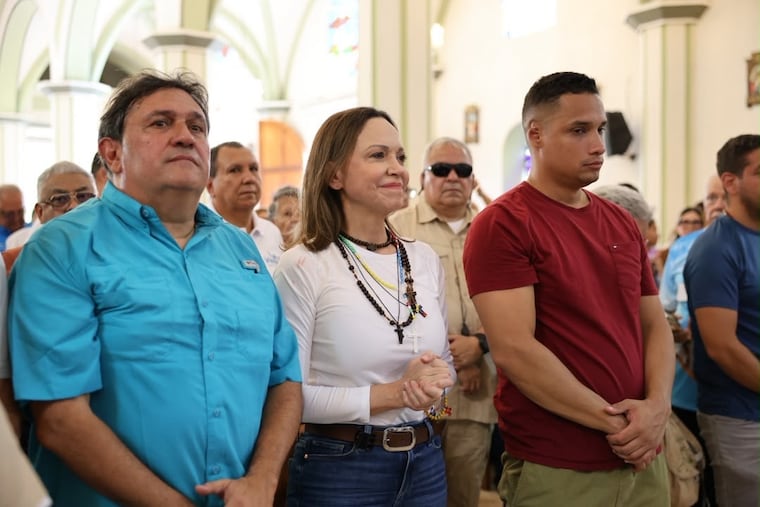
Venezuela’s opposition leader Machado returns after months in exile amid growing concerns about the state of democracy in the country.
CARACAS, Venezuela — María Corina Machado, a prominent opposition leader and Nobel laureate, has returned to Venezuela after nearly a year in exile, igniting significant discourse surrounding the nation’s democratic trajectory. Her reemergence occurs amid growing trepidation over the country’s political stability and the implications of U.S. foreign policy.
Machado, who has been widely recognized for her efforts to oppose President Nicolás Maduro’s government, announced her return via social media, stating her commitment to the Venezuelan people. This marks her first public appearance since the U.S. military’s intervention earlier this year, which resulted in Maduro’s ouster and the controversial installment of an interim president—Delcy Rodríguez—who has since remained in office without calling for new elections.
Upon arriving, Machado received an enthusiastic reception in Lara, west of Caracas. Applause and cheers from supporters filled the church where she spoke, highlighting the profound connection she has with many Venezuelans who see her as a beacon of hope. Prominent members of the opposition, including Edmundo González, welcomed her back, reiterating the belief that her leadership is crucial in guiding the country through its current crises.
Since Maduro’s departure, Rodríguez—a long-time ally of the former president—has led Venezuela. Initially appointed to serve a short interim term of 90 days, she has extended her governance amid accusations of lacking electoral legitimacy. The U.S. administration, having previously supported Maduro’s removal, now faces scrutiny for its decision to back Rodríguez’s leadership rather than welcoming Machado’s return to the political forefront.
In the wake of Maduro’s ousting, evidence has mounted suggesting the Venezuelan opposition, represented by González, won a primary election decisively against Maduro. However, the ruling National Electoral Council, perceived as loyal to the government, declared Maduro victorious, further complicating the political landscape.
Machado’s commitment to a presidential election remains steadfast. Following her lengthy efforts—interrupted by government barriers—her party continues to press for a definitive electoral timeline. U.S. officials have shifted focus towards economic stabilization in Venezuela before endorsing any electoral reforms, leading to a complex interplay between domestic actions and international interest.
As Machado embarks on this new chapter, the political stakes remain high. Her supporters view her presence as a pivotal moment for the future of Venezuelan democracy, reinforcing the nation’s ongoing struggle against authoritarianism and the quest for a legitimate electoral process.
Amid the challenges, Machado’s return exemplifies both personal resilience and the unwavering demand for democratic governance in Venezuela, raising critical questions about the future direction of the country and the role of external powers in its political reconciliations.