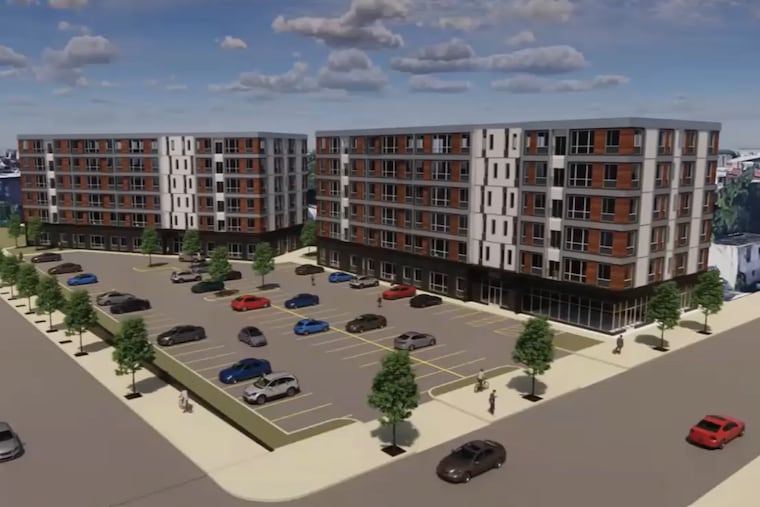
West Philadelphia affordable housing project may move forward nearly six years after its initial proposal.
An affordable housing initiative in Cedar Park has progressed following a ruling by a Philadelphia judge that dismissed a neighboring resident’s legal challenge. This decision moves forward a project aimed at developing 104 residential units across two buildings, which was conceived in 2020 but faced various hurdles.
In her ruling, Common Pleas Judge Idee Fox upheld the legality of new zoning regulations for a triangular group of parcels located on Warrington Avenue. The current zoning allows construction of buildings up to seven stories, a change that sparked controversy among some residents.
The resident challenging the project, Melissa Johanningsmeier, argued in her 2023 lawsuit that the development contravened the city’s objective of preserving the character of Cedar Park, which is predominantly lined with single-family homes. She expressed concerns related to increased traffic, parking shortages, and a reduction in green space that would result from the new development.
During the trial, which extended over two days in October, Johanningsmeier indicated that there was widespread discontent within the community regarding the project. However, Judge Fox appeared unconvinced by the claims, noting the absence of supporting evidence or witness testimonies to substantiate the allegations of neighborhood opposition, particularly towards a project championed by City Councilmember Jamie Gauthier.
Judge Fox clarified that her role was not to determine the merit of the project but to assess the constitutionality of the zoning changes. She emphasized that if residents were dissatisfied with local developments, they had avenues to express their concerns through political channels, including voting.
The origins of the project date back to 2020, when New York-based affordable housing developer Omni proposed the construction of 174 reasonably priced apartments in West Philadelphia. Initial plans faced substantial pushback due to the proposed height of the buildings and insufficient parking amenities for potential residents. In response to community feedback, Omni revised their plans in 2021, positioning the buildings to mitigate shadows over neighboring homes and incorporating a parking lot that would provide 100 spaces for the 104 units.
These adjustments largely alleviated concerns from most critics in the community, enabling Omni to secure necessary approvals from the Zoning Board of Adjustment. Despite this, Johanningsmeier voiced persistent opposition, challenging the zoning board’s decision in court.
The crux of the legal battle centered around whether the zoning change constituted “spot zoning,” which Johanningsmeier’s attorney argued was misaligned with the neighborhood’s single-family home character. While affordable housing is a commendable goal, critics highlighted the risk of imposing large structures that do not blend with existing residential buildings.
In a noteworthy response, Gauthier heralded the ruling as a significant move against gentrification, asserting the necessity for lower-income residents to have access to communities that offer vital services and amenities. Housing advocates argue that prolonged legal disputes like this one significantly inflate development costs, underscoring the challenges in delivering affordable housing in the United States.
Several local residents, including advocates for urban development, expressed frustration over the drawn-out process, pointing out that opposition from even a single individual can stymie progress on crucial housing initiatives, which has broader implications for affordability within the community.