
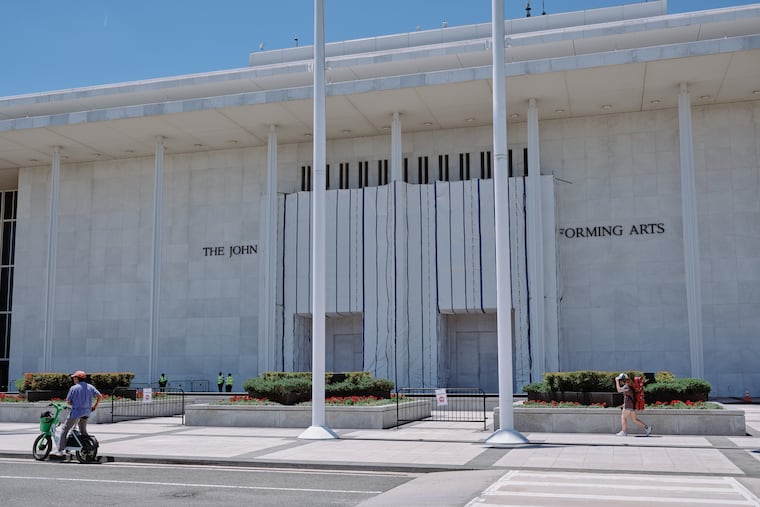
Whistleblowers allege contracting issues at Kennedy Center during Trump administration.
The John F. Kennedy Center for the Performing Arts is facing scrutiny as it gears up for significant renovations. Internal documents, allegedly provided by former project managers, have been forwarded to both the Senate and the House committees, indicating that the institution may have circumvented standard government contracting procedures during the Trump administration. The documents claim that vendors were chosen without competitive bidding, relying on rationales that some have described as questionable.
In a notable instance, a center official referred to a flooring company as the only qualified firm on the mid-Atlantic seaboard, citing its unique operational model as critical for the project’s acoustic and architectural needs. However, the whistleblowers, represented by unnamed lawyers, have contested the validity of this claim, questioning the company’s singularity in its expertise and its selection process.
The report alleges that the Kennedy Center’s management prioritized expediency to accommodate high-profile events, such as the Kennedy Center Honors, which occur in December, directly linking the expedited renovations to deadlines imposed by the presidency. The whistleblower’s submission asserts that in doing so, the center compromised federal contracting laws and regulations.
In response, Kennedy Center officials maintained that they operate under stringent financial oversight and refuted the allegations of any procedural bypass, asserting their commitment to both transparency and the preservation of the cultural institution.
The White House has also defended its role, contending that previous management allowed the Kennedy Center to deteriorate and emphasizing President Trump’s commitment to the venue’s restoration. Assertions from the past administration highlight an investment of 7 million from Congress to facilitate these renovations.
Among the myriad projects currently underway, concerns arise over contracts awarded without competitive bidding, including a .4 million contract for exterior painting, with internal communications indicating work commenced prior to formal contract approvals. These revelations have prompted skepticism regarding the legitimacy of these procurement practices, particularly given that the center operates as a nonprofit yet adheres to federal rules for contracting due to its status as federal property.
Legal experts have noted the implications of a recent policy change at the Kennedy Center, which suggests a loosening of the established rules for sole-source contracts. This pivot allows for awards without competitive bids under specific circumstances perceived as urgent or necessary.
As the center’s renovations progress, questions linger about the proper allocation of public funds and whether existing contracting procedures are sufficient to maintain transparency and accountability. As investigations unfold, officials face increasing pressure to provide clarity on spending practices amid rising concern among lawmakers and the public regarding the integrity of the renovation processes.
Senator Sheldon Whitehouse has taken a proactive stance, expressing his intention to seek answers regarding potential discrepancies in the use of public funds. With the Kennedy Center proposing extensive refinements to address longstanding infrastructural issues, the upcoming developments will undoubtedly face heightened scrutiny from both lawmakers and constituents alike.


