Frogs Seen at ICE Protests Highlight Environmental Concerns Surrounding Climate Change and Wildlife Impact.
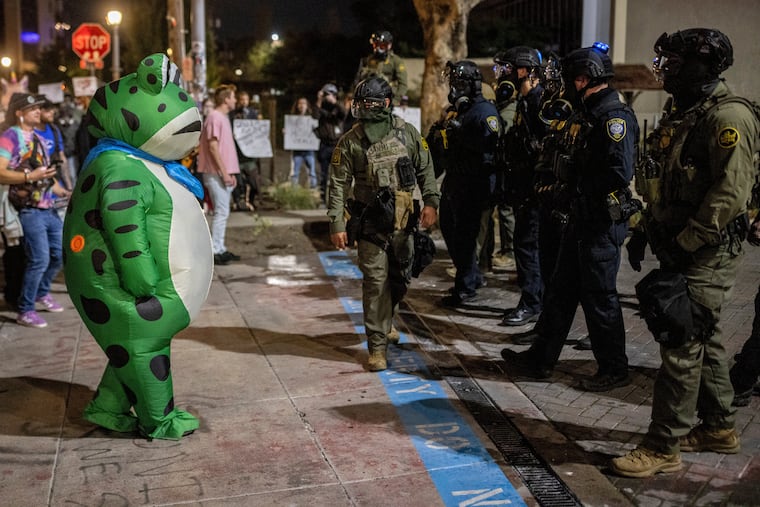
In Portland, Oregon, a novel symbol of protest has emerged, embodying a playful yet pointed critique of political narratives surrounding immigration enforcement. Demonstrators donned vibrant, inflatable frog costumes have transformed from a local curiosity into a nationwide emblem of resistance against federal immigration policies. This playful demonstration stands in stark contrast to recent claims by President Donald Trump, who has characterized Portland as a city besieged by “domestic terrorists.”
The whimsical portrayal of amphibians has proliferated, particularly after an incident where law enforcement officers pepper-sprayed a demonstrator within his costume, prompting outrage and solidarity among protesters. Video documentation of this confrontation has fueled a broader movement, encouraging participants to adopt various animal costumes, including sharks, giraffes, chickens, and raccoons. Activists have utilized the imagery to expand their reach, with events like the recent “No Kings” marches garnering robust attendance in cities such as Philadelphia.
As the outrageous spectacle plays out, observers have noted the effective use of humor in activism, which aims to undermine the gravitas often associated with law enforcement. Scholars argue that this method of protest—embedding comedy within serious discourse—can effectively challenge authoritative narratives. Temple University professor Ralph Young highlights that the absurdity of protest attire serves to ridicule exaggerated claims about the city’s supposed state of chaos.
Portland has emerged as a focal point of opposition to Trump’s immigration deportation efforts, which have drawn sharp criticism both locally and nationally. The president’s fixation on the city has escalated tensions, leading to proposed deployments of National Guard troops to quell protests outside U.S. Immigration and Customs Enforcement (ICE) facilities. A recent court ruling has favored this deployment, allowing for heightened military presence in the area.
The frogs, alongside other animal representations, draw from a historic tradition of jesters who offered unfiltered truths to authority figures. This concept of voicing dissent through humor continued with marked protests throughout the 20th century, where satirical figures were used to critique the political landscape.
Frogs and their companions have also made appearances in Philadelphia protests, with slogans that playfully echo political critiques, showcasing the adaptability and reach of this unique form of activism. Images of frogs on protest signs are now commonplace, often depicted as heroic figures in satirical contexts.
While some observers have noted a biblical connotation to the frog-centric imagery, the primary intention remains a lighthearted critique of serious political matters. The ongoing presence of these amphibious advocates at demonstrations signals a creative fusion of humor and political engagement, turning the streets into platforms for both protest and performance, and reminding onlookers that sometimes, the most effective responses to serious accusations can come with a dose of playful absurdity.
As tension mounts around immigration enforcement and political dissent in America, the rising popularity of frog-themed protests illustrates the capacity for creativity in activism to challenge narratives and inspire broader movements across the nation.