
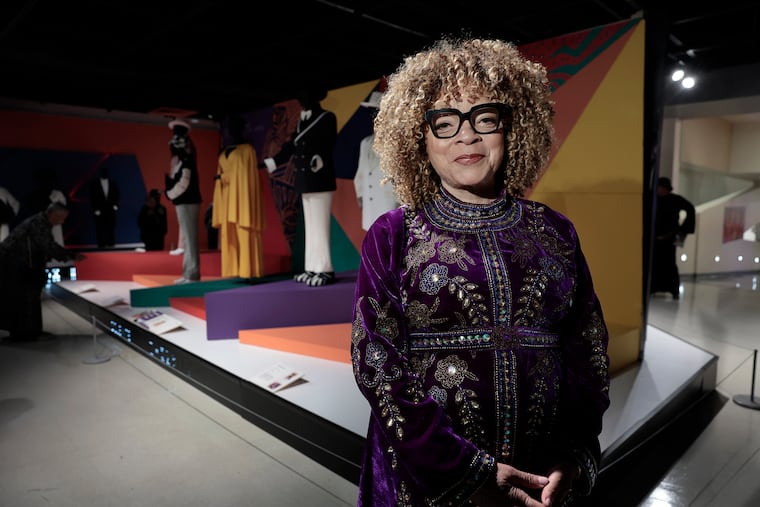
Ruth E. Carter’s AAMP exhibit highlights her influence on the portrayal of Black America through her groundbreaking costumes and designs.
Ruth E. Carter, an Oscar-winning costume designer renowned for her visionary work, recently took on the challenge of outfitting characters in Ryan Coogler’s upcoming film, “Sinners,” set in the Mississippi Delta. Coogler had a distinct vision for the film’s aesthetic, stating that one character, Smoke, needed to wear blue, while his twin, Stack, required a striking red ensemble. This request sparked an immediate inquiry for Carter regarding how to harmonize these color contrasts within the film’s 1930s setting, which depicted sharecroppers turned bootleggers.
Carter meticulously undertook extensive research, allowing her creativity to flourish. By the time she began fittings for Michael B. Jordan, who portrays both Smoke and Stack, she had curated an impressive collection of blue and black outfits suitable for the period. The outcome was nothing short of iconic. When she adorned Jordan with a red fedora for Stack’s ensemble, Coogler’s elated reaction affirmed her design choices.
The vibrant costuming established the Smokestack twins’ unique personas: Stack, the fiery sibling dressed in a fitted pinstripe suit and adorned with gold accessories, and Smoke, characterized by a more subdued yet dapper look in blue tweed. These costumes resonated with the audience, evident in the popular trend of Halloween costumes inspired by the characters.
Currently, Carter’s work is displayed at the African American Museum in Philadelphia as part of the exhibit titled “Ruth E. Carter: Afrofuturism in Costume Design.” This exhibition showcases over 80 of her designs, including those from landmark films like “Malcolm X,” “The Butler,” “Coming 2 America,” and, of course, both “Black Panther” films. This exhibit not only celebrates Carter’s illustrious career but also marks the museum’s 50th anniversary and the commemoration of America’s Semiquincentennial.
Carter has spent 37 years shaping the visual landscape of cinema, documenting the cultural zeitgeist through her designs. Her iconic costumes have influenced countless viewers, particularly in recent years, as audiences embraced the fashion of Wakanda, sparking a resurgence of cultural pride and celebration during events like Halloween.
Born in Springfield, Massachusetts, Carter’s journey began with a passion for sewing nurtured by her mother. She further honed her craft at Hampton University, where she first delved into costume design for theater productions. After a pivotal introduction to Spike Lee, Carter’s film career took off with her work on “School Daze,” which laid the foundation for a prominent collaboration spanning numerous films over the years.
Now, her latest exhibit, “Afrofuturism in Costume Design,” spans three galleries at the museum, showcasing a variety of designs that reflect her commitment to research and detail. Highlighting costumes from various eras, the exhibit displays Carter’s childhood sewing machine, along with recreations of historical garments that provide insight into her creative process.
As a testament to her influence on both fashion and film, Carter’s work serves as an enduring symbol of African American culture and identity. The exhibit remains open through September 6, 2026, at the African American Museum in Philadelphia, welcoming visitors to explore the rich tapestry of history, artistry, and creativity that defines Carter’s career. Tickets are available for for adults and for children.
This captivating display of costume design not only celebrates Ruth E. Carter’s illustrious career but also offers a platform for dialogue about the intersections of culture, fashion, and narrative in film.


