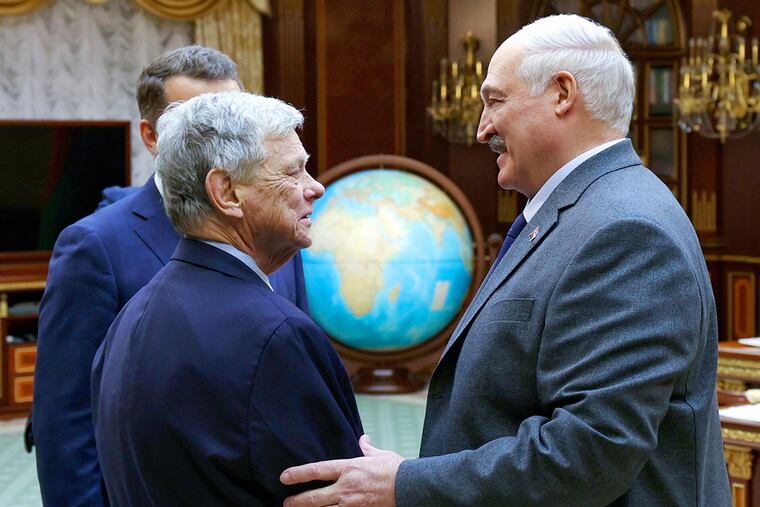
Belarus releases Nobel laureate Bialiatski and opposition leader Kolesnikova following the lifting of U.S. sanctions.
Belarus Frees Political Prisoners in Possible Shift Toward U.S. Relations
In a significant development for international diplomacy, Belarus has released Nobel Peace Prize laureate Ales Bialiatski, prominent opposition figure Maria Kolesnikova, and a total of 123 prisoners. The announcement followed two days of discussions with U.S. officials in an effort to improve relations and address the economic impact of severe sanctions imposed on various sectors, including agriculture.
This latest move comes as the U.S. lifted sanctions specifically targeting the Belarusian potash sector, a critical component of the nation’s agricultural exports. President Alexander Lukashenko’s government, widely regarded as an ally of Russia, has faced increasing isolation from the West due to ongoing human rights abuses and its support of Russia’s military actions in Ukraine. Historically, Belarus has struggled with sanctions, which have led to economic difficulties for the country of approximately 9.5 million residents.
John Coale, the U.S. special envoy for Belarus, described the diplomatic discussions as productive, indicating that the goal is to foster normalized relations. He highlighted the reciprocal nature of the negotiations, emphasizing that lifting sanctions and releasing prisoners are steps toward dialogue and improved relations between the two nations.
Among those released, Bialiatski has been a symbol of the fight for human rights in Belarus. He, alongside Memorial and Ukraine’s Center for Civil Liberties, received the Nobel Peace Prize in 2022 while still imprisoned. Following a conviction for politically motivated charges and a 10-year sentence, his release marks a notable milestone in the ongoing struggle against political repression in Belarus.
Kolesnikova, a key figure in the substantial protests against Lukashenko’s regime in 2020, was also released after being sentenced to 11 years on charges perceived as politically driven. Her imprisonment and subsequent release further highlight the complexities of political dissent in Belarus.
The released individuals were reportedly transported to neighboring countries, including Lithuania and Ukraine, with most of them seeking refuge and necessary medical treatment. Ukrainian President Volodymyr Zelensky confirmed the return of five Ukrainian nationals as part of the release process.
As Belarus seeks to thaw relations with the West, the international community remains vigilant. Opposition leader Sviatlana Tsikhanouskaya cautioned against naivety, asserting that while prisoner releases may appear progressive, the Lukashenko regime continues to suppress dissent and support Russian military actions. She has called for caution regarding any prospects of easier sanctions and emphasized the necessity for systemic changes in Belarus.
The lifting of U.S. sanctions on the potash sector—previously a key economic driver for Belarus—could signal a more substantial engagement with Western nations. Analysts suggest that the easing of sanctions might pave the way for further diplomatic discussions regarding Belarus’s role in the regional geopolitical landscape.
While the recent developments are viewed as significant, they underscore the broader complexities of Belarus’s foreign relations. As the country navigates its position between Russia and the West, the ramifications of recent actions will undoubtedly unfold in the coming weeks and months.
Media News Source