Million-dollar grant secures air conditioning and essential repairs for Mother Bethel AME sanctuary.
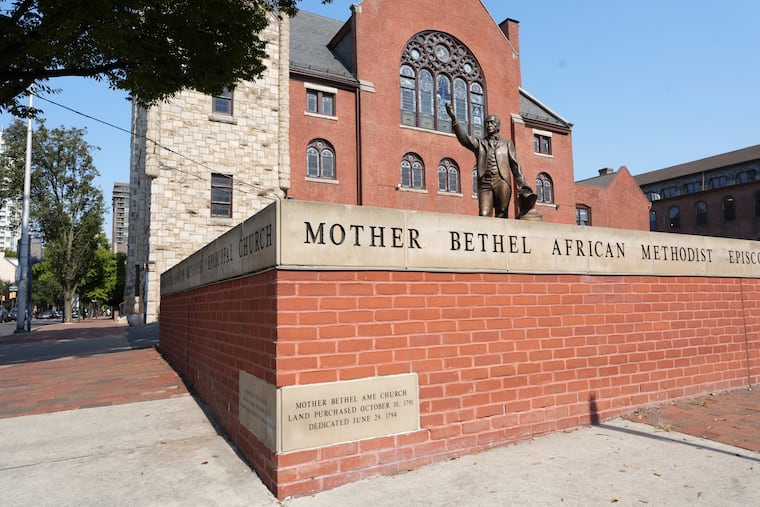
The Mother Bethel African Methodist Episcopal Church, renowned for its rich historical significance, is home to a remarkable collection of American history artifacts. The church, established 162 years ago, houses key items including the Bible of its founder, Richard Allen, the pulpit from which he delivered sermons, original pews from its inaugural building, and a bust of Allen that was first showcased at the World’s Fair in 1876.
Maintaining this historic institution presents considerable challenges. The costs associated with repairs to stained glass windows, tuning the organ pipes, and preserving antiquated artifacts are substantial. With the aim of addressing these financial burdens as well as enhancing community engagement, Mother Bethel recently obtained a million grant from the African American Cultural Heritage Action Fund, one of five historic African American churches to receive such support.
The announcement of this grant was particularly fortuitous, coming as Philadelphia gears up to celebrate its Semiquincentennial, marking 250 years since the signing of the Declaration of Independence. The church’s reverend, Carolyn C. Cavaness, expressed immense relief and excitement over the funding, highlighting several pressing needs within the church, such as repairs to its masonry and addressing accessibility issues. Currently, the church requires 40 steps to reach the second floor, which lacks an elevator.
The African American Cultural Heritage Action Fund, a segment of the National Trust for Historic Preservation, was created in 2017 to allocate financial support to significant locations tied to African American history. Encompassed within this fund is the Preserving Black Churches Project, which is supported by a generous million investment from the Lilly Endowment. Black churches, historically pivotal to African American communities, have continued to serve as essential cultural and civic hubs but often require financial assistance to remain viable.
In addition to Mother Bethel, other recipients of the million funding include the First African Baptist Church in Beaufort, South Carolina—a vital educational site for Black individuals during the Reconstruction era—and several other historically significant churches across the country. Notable among them are Chicago’s Robert Temple Church of God in Christ, where Emmett Till’s funeral occurred, and Brown Chapel AME in Selma, a key site during the 1965 Voting Rights Act Movement.
The legacy of Mother Bethel is particularly profound; it was founded in 1791 by Richard Allen and his contemporaries after they faced racial discrimination at St. George’s Methodist Church. The church’s first structure, established in 1794, was a repurposed blacksmith shop, with its current building completed in 1890. This church stands on the oldest parcel of land continuously owned by African Americans in the United States.
The notable events that have taken place at Mother Bethel include the first Colored Convention in 1830, which ultimately led to the establishment of the National Association for the Advancement of Colored People (NAACP). Its historical significance has been recognized through various designations, including its designation as a historic shrine by the Department of the Interior in 1965.
Moving forward with financial assistance from the Cultural Heritage Action Fund, Cavaness aims to address both urgent and long-term building needs—including the installation of air conditioning in the sanctuary and tuning the church’s historic organ. Cavaness articulated the multifaceted challenge of balancing ministry with preserving history. With this grant, Mother Bethel aspires to create a sustainable future that honors its heritage while serving its community effectively.
Media News Source