
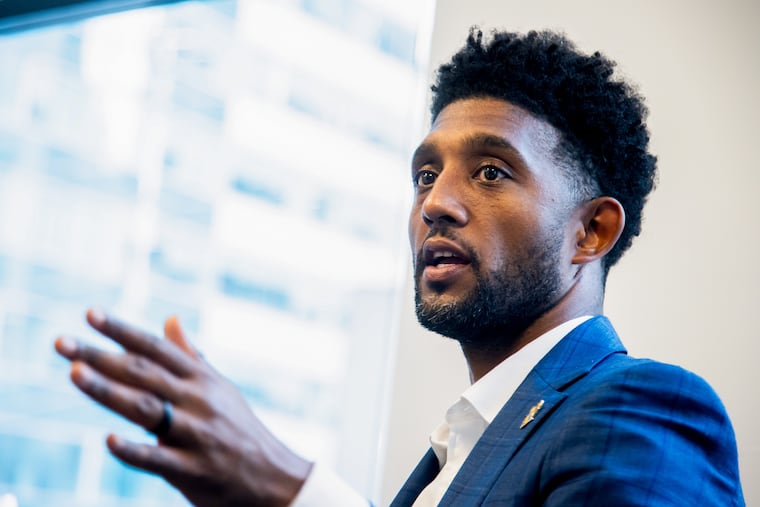
Philadelphia City Council Could Gain Insights from Baltimore’s Leadership and Governance
In a recent analysis, attention is drawn to the ways Philadelphia has navigated its challenges and the lessons it might learn from peer cities. The piece argues that rather than looking northward to New York City for inspiration, Philadelphia should instead turn its gaze south towards Baltimore’s leadership under Mayor Brandon Scott, particularly in addressing common urban issues such as gun violence, economic opportunity, and educational shortcomings.
Philadelphia has recently seen discussions on the possibility of electing a leader akin to New York City Mayor Zohran Mamdani, who is noted for his communication strategies. Yet, the article highlights that Baltimore’s struggles and solutions are more analogous to those experienced by Philadelphia. Like Philadelphia, Baltimore has been grappling with significant gun violence and a distressed educational system, exacerbated by the COVID-19 pandemic, which has seen both cities encounter alarming levels of violence.
Mayor Scott of Baltimore has set a precedent in dealing with these social issues, employing targeted approaches to combat crime and facilitate economic revitalization. He emphasizes the necessity of balanced interventions—eschewing overly aggressive law enforcement tactics while providing essential support and resources to at-risk communities. The Baltimore model has reportedly led to a decline in gun violence, paralleling Philadelphia’s crime reduction efforts through similar comprehensive strategies. Philadelphia’s Director of Public Safety, Adam Geer, mentions that these preventive measures are also being adopted in their own community, offering collaborative support to at-risk youths.
However, the piece asserts that Philadelphia struggles with vacancy issues, highlighting the original intent behind the city’s land bank which aimed to address the surplus of empty lots and homes. Unfortunately, overregulation and political discretion have hampered its effectiveness. In contrast, Baltimore is actively working to decrease its vacant properties through innovative programs that address historic inequities, reducing vacant units significantly since 2020.
Moreover, Philadelphia faces fiscal challenges as City Council weighs decisions that could affect the city’s budget. City officials must consider avenues for expanding the tax base rather than increasing the tax burden on residents, a challenge that continues to hinder economic growth and public service funding.
As economic conditions tighten, a recent report reveals that the region ranks low in job prospects for recent graduates, which is a concern that has historically driven residents away. To combat this trend, initiatives supported by organizations such as the Pew Charitable Trusts aim to create an estimated 100,000 middle-class jobs through growth in tradable industries, which could help bolster the local economy.
The findings underscore the urgent need for Philadelphia to emulate successful strategies adopted by other cities, particularly in addressing common urban challenges. As the city contemplates its future leadership and policy directions, learning from Baltimore’s approach could serve as a framework for navigating its own pressing issues.
Media News Source


