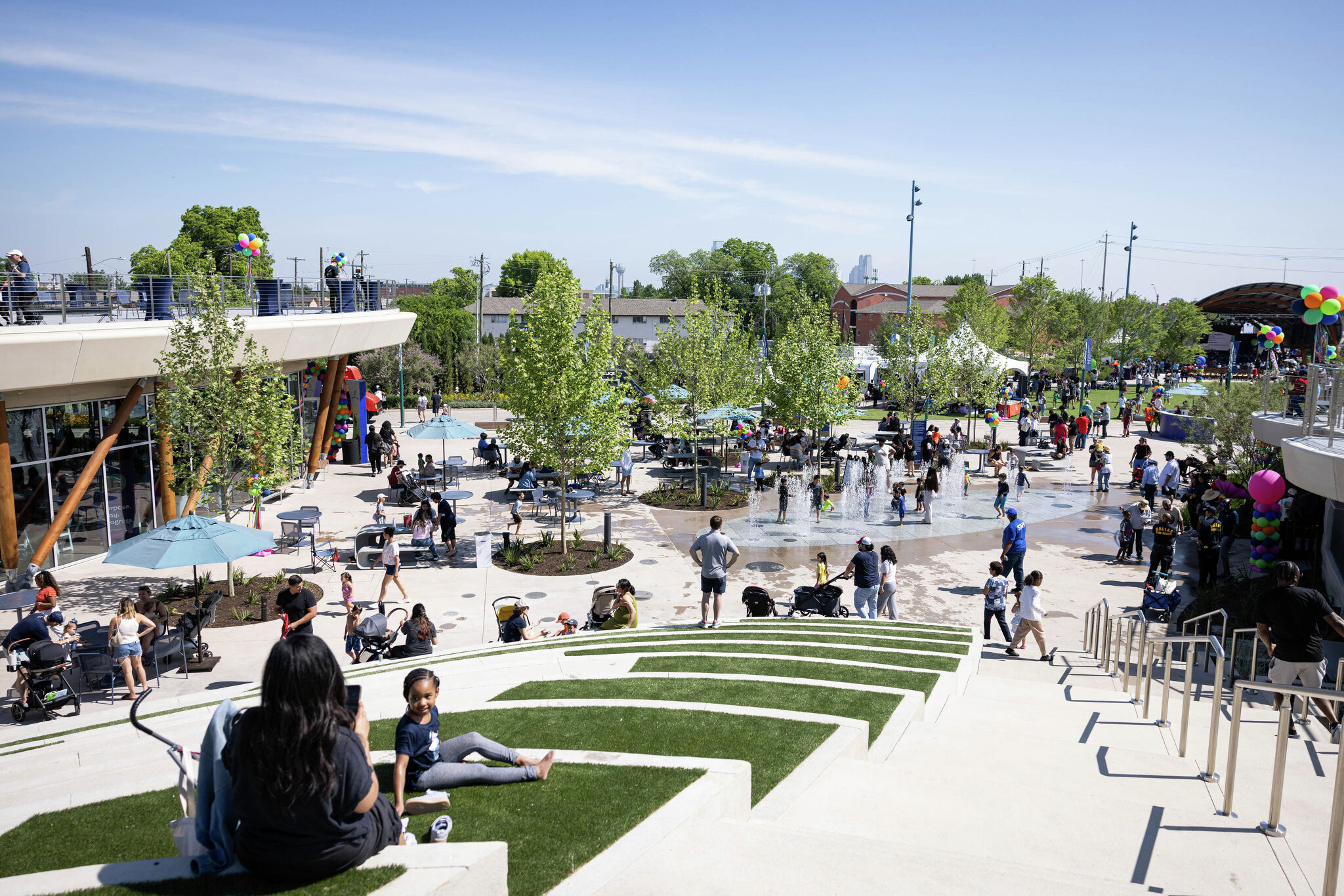
Halperin Park reconnects neighborhoods in Dallas, turning a once envisioned project into reality.
Halperin Park, Dallas’ latest addition to its recreational landscape, opened its doors to the public on Saturday, attracting hundreds of visitors eager to explore its facilities. Families and children reveled in the park’s playgrounds and water features, while enjoying expansive views of the Dallas skyline and Fair Park. The opening marks a significant milestone in a community effort aimed at transforming the cityscape of Dallas.
The park, which spans over Interstate 35E, plays a crucial role in re-establishing connectivity between neighborhoods in Oak Cliff that have historically been divided both physically and economically for decades. Its cultural significance extends beyond mere recreational space; it embodies a vision of enhanced community cohesion and urban revitalization.
Construction of Halperin Park has already spurred investment in the surrounding area, as seen with the emergence of new developments such as the East Dock, a mixed-use project that repurposes a historic icehouse from the early 1900s. This trend is anticipated to continue, with further enhancements expected to follow as the park becomes a catalyst for neighborhood improvement.
In close proximity to the park is the Dallas Zoo, which stands to gain from the increased foot traffic and community engagement that Halperin Park will foster. This dynamic is akin to the positive effect the Dallas Museum of Art experienced following the opening of Klyde Warren Park, the city’s first deck park.
The first phase of Halperin Park has been realized with an investment of 2 million and covers 2.8 acres. Future developments aim to expand the park with a second phase projected to cost approximately 0 million, capped by the highway between South Ewing and South Marsalis avenues. To date, the project has secured million in funding commitments, with completion anticipated around 2029.
Halperin Park exemplifies the spirit of Dallas, showcasing how public-private partnerships can lead to transformative urban projects. Approximately 60 percent of the funding for the first phase was sourced from private donations, notably a generous million contribution from philanthropists Gayle and Jim Halperin. This initiative reflects the commitment of local leaders, such as April Allen, president and CEO of the Southern Gateway Public Green Foundation, who played an instrumental role in overseeing the project.
Anticipated to generate billion in economic impact during its initial five years, Halperin Park is poised to attract visitors from across the region, coinciding with the upcoming World Cup events. Beyond its aesthetic appeal and recreational offerings, the park symbolizes a broader promise of community regeneration and opportunity for Dallas.