
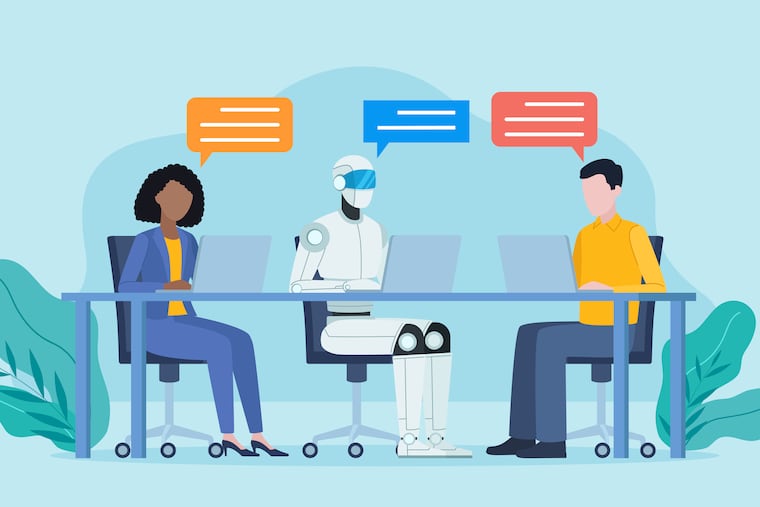
Experts suggest the anticipated job loss due to AI advancements may not occur as expected.
As artificial intelligence (AI) continues to advance, public concern regarding its impact on job availability is escalating. A recent Quinnipiac poll reveals a striking shift in sentiment; 70% of Americans now fear that AI will lead to fewer job opportunities for humans, an increase from 56% in 2022. In this context, approximately 30% of respondents express specific worries about their individual job security. These anxieties are fueled by stark warnings from leaders in the AI industry, suggesting a dramatic transformation of the labor market.
Dario Amodei, CEO of Anthropic, predicts that nearly half of entry-level white-collar jobs might disappear within five years. Meanwhile, Mustafa Suleyman, CEO of Microsoft AI, projects that most white-collar tasks could become fully automated within the next year and a half. Furthermore, OpenAI has advocated for a reduced workweek, proposing a 32-hour format to accommodate AI’s potential for mass leisure rather than widespread job loss. In an environment rife with such predictions, the growing presence of advertisements promoting AI solutions, which often boldly claim that human workers are no longer necessary, does little to quell public anxiety.
Despite these fears, it is essential to maintain a cautious perspective regarding the anticipated impact of AI on employment. Many tech companies, including Meta and Microsoft, have begun implementing layoffs, attributing such actions to the proliferation of AI. However, it is vital to consider that these companies may be adjusting staffing after periods of rapid hiring, while simultaneously attempting to placate investors with dramatic narratives about AI.
Critically examining economic indicators presents a more nuanced perspective. For example, the unemployment rate has remained stable, hovering around 4.3% as of March 2023, compared to 4.4% in March 2020. Average hourly earnings have also shown stability, and the demand for software engineers remains robust. While potential layoffs loom on the horizon, the data does not necessarily corroborate a wholesale elimination of jobs.
Economists express skepticism about the prospect of widespread unemployment driven by AI. Alex Imas, an economist at the University of Chicago, emphasizes the importance of identifying what will become scarce in a future dominated by advanced AI technologies. Historically, as certain resources become more plentiful, new forms of scarcity emerge, often driving demand for human skills that machines cannot replicate. Imas suggests that as the economy evolves, the need for human interaction and emotional intelligence may paradoxically grow, leading to increased demand for interpersonal services and roles that require human insight.
As automation increases, humans may increasingly value the personal touch and relational skills—elements that AI cannot fully replicate. Drawing parallels to previous technological advancements, such as the introduction of electronic spreadsheets that revolutionized accounting, the fear of job displacement has often been overblown. Instead, these advancements have led to new, variant job opportunities, as demands for human skills adapt and evolve.
In a society likely to face a future shaped by AI, the intersection of technology and human labor remains pivotal. While some jobs may disappear, new roles that leverage uniquely human abilities stand to emerge. The question then becomes: how willing are workers, particularly younger generations, to adapt to these shifts? The social structure surrounding interpersonal relationships, which have diminished in various ways over recent decades, raises concerns about whether society can foster the depth of connection necessary to thrive in an increasingly automated world.
Ultimately, as society navigates this transitional phase, a proactive approach that emphasizes skill development, adaptability, and human connection will be essential to harnessing AI’s potential while mitigating the risks of job displacement.
For further insights on this topic, readers may refer to Media News Source.


