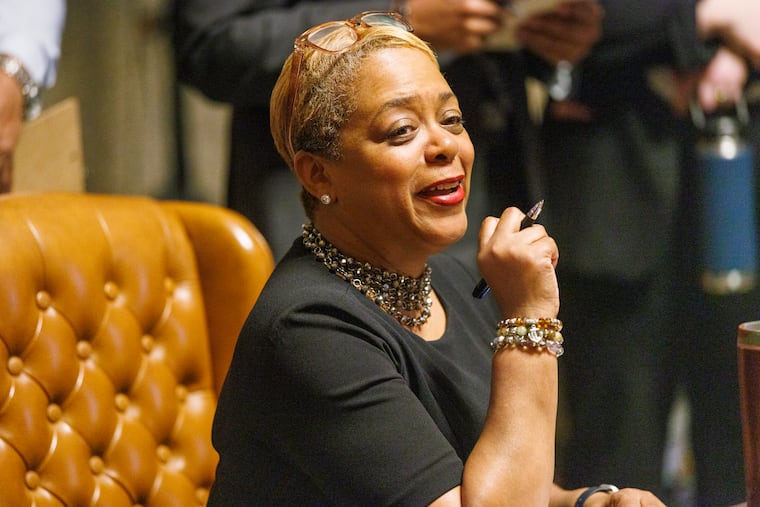
Cindy Bass stays in the Democratic ward leader race in Mount Airy while agreeing to share power with progressive members.
In a significant and closely watched election, the race for the leadership of Mount Airy’s 22nd Ward has concluded in a tie, resulting in a power-sharing arrangement between two candidates. Philadelphia City Councilmember Cindy Bass and progressive challenger Octavius Price each garnered 27 votes from committeepeople during a redo of the ward leader election held recently. This influential party position is crucial in one of the city’s most populous neighborhoods.
The recent voting process followed a tumultuous week filled with controversy. Initially, Bass had declared victory in a previous vote on June 8, amidst a divided voice vote at a community gathering at the Germantown Seventh-day Adventist Church. However, concerns regarding the fairness and transparency of that vote led the Democratic City Committee to mandate a reelection after a video emerged showing Bass declining calls for a roll call vote.
The two candidates engaged in closed-door negotiations following the recent tie, culminating in a compromise that allows Bass to retain the role of ward leader while Price will assume the position of ward chair, which is effectively the No. 2 role. Furthermore, they agreed to collaborate on a slate of officers for the ward’s executive committee, aiming to enhance political unity and operational effectiveness.
During the week leading up to the election, there were reported attempts to sway committeepersons, including an incident involving Price and an activist, Nate Holt, who allegedly attempted to offer financial incentives to a committee member to rally support against Bass. Although Price condemned these actions, Holt maintained that he acted independently and not under any candidate’s direction.
Absent from the recent election was committee member James Harrison, whose participation might have influenced the outcome, as he was pivotal in the previous vote. Additionally, another committeeperson abstained from the vote, further complicating the election dynamics.
The election was held at the party’s headquarters under the supervision of the organization committee, which consists of experienced ward leaders. The stakes were high, as control of the 22nd Ward is expected to play a critical role in the upcoming City Council elections.
In this contentious political landscape, Cindy Bass remains a figure with a mixed reputation, often clashing with progressive activists and narrowly securing her previous election. The results of the election reflect not only factional divides but also the ongoing challenges facing the Democratic Party as they prepare for future electoral contests.
In parallel races conducted that night, other candidates successfully maintained their initial leads, signaling a noteworthy continuity within those wards.
The outcomes of these elections highlight the intricate dynamics of local politics within Philadelphia, underscoring the importance of unity and cooperation in navigating the future challenges ahead for the party. The arrangement between Bass and Price could serve as a template for future collaborations in a political climate often marked by division.
As the party prepares for a critical election year, the leadership dynamics in these wards will likely be closely observed by both party members and constituents alike, anticipating how this new collaboration may shape local governance.
Media News Source