
Dallas company focuses on saving endangered species while pursuing de-extinction efforts.
Colossal Biosciences has announced a strategic partnership with the U.S. Fish and Wildlife Service to establish a genomic and biobanking archive aimed at the conservation of endangered species. This innovative initiative seeks to develop a network of biobanks globally, with an ambition to create between five and ten facilities in various countries, including potential locations in Canada, Europe, and Africa.
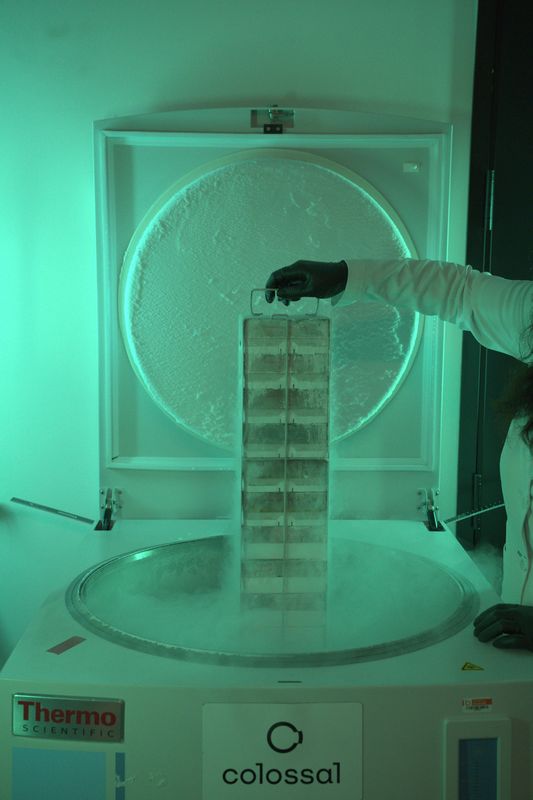
The proposed biobanks will house living cells, reproductive tissues, and genomic material collected by conservation researchers, recovery programs, and rapid deployment teams. These biological specimens will undergo genomic sequencing and be preserved through cryostasis, a method designed for long-term storage. Such an archive is poised to play a critical role in ensuring the survival of species facing the dual threats of habitat degradation and climate change.
Colossal Biosciences operates under its BioVault network, a collaborative platform intended to unite researchers in the common pursuit of biodiversity protection. The data generated from this project will be made publicly accessible, facilitating collaborations among wildlife managers, conservationists, and research institutions worldwide.
Experts in the field, such as James Bednarz, a clinical associate professor of conservation biology at the University of North Texas, have expressed cautious optimism regarding the initiative. While acknowledging the urgent need for such biobanking efforts in light of declining species populations, he warned that they should not overshadow or undermine critical on-the-ground conservation tactics, which could place existing efforts in jeopardy.
U.S. Fish and Wildlife Service Director Brian Nesvik highlighted the importance of integrating advanced scientific methodologies to preserve America’s ecological heritage in response to mounting pressures on biodiversity. Notably, the project aims to function not only as a safeguard against extinction but also to galvanize ongoing research efforts to enhance species protection.
Matt James, Chief Animal Officer at Colossal Biosciences, emphasized the project’s proactive approach to conservation. He stated that the resources acquired through this initiative will be used to deepen understanding of species biology, enhance disease resilience, and engineer adaptations for future climatic conditions. This multifaceted strategy aims to ensure the longevity of endangered species while nurturing a collaborative research environment dedicated to preserving global biodiversity.
As conservation challenges continue to escalate worldwide, the establishment of genomic and biobanking archives stands as a promising avenue for mitigating the risk of species extinction and for fostering a robust scientific approach to conservation.
Media News Source.


