
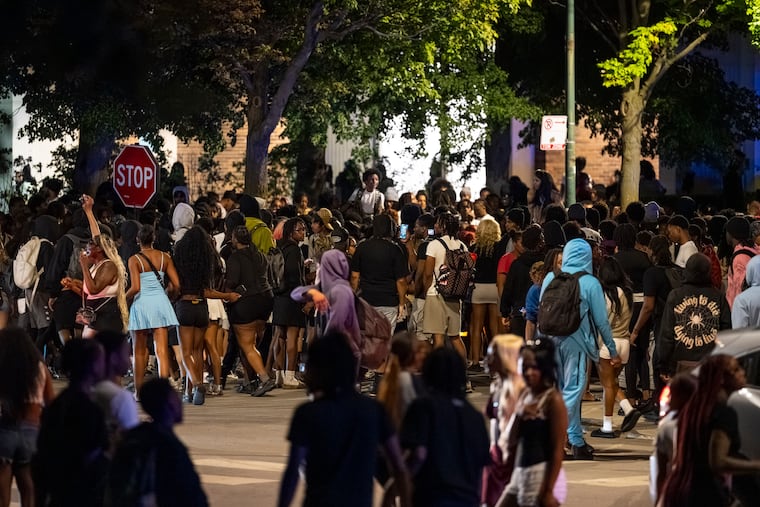
Teen social media takeovers shift from lightheartedness to serious issues, highlighting new challenges in online interactions.
As the phenomenon of organized gatherings known as “teen takeovers” gains traction across the United States, concerns among city officials and police departments continue to grow. These events, often publicized through social media platforms, frequently attract large crowds of young people eager to socialize, but they have also been associated with incidents of violence, theft, and vandalism. Recent months have seen a disturbing rise in such gatherings, prompting cities to implement various measures in response.
One notable incident occurred over the July 4 holiday weekend in Raleigh, North Carolina, where several thousand youths converged at two locations. Unfortunately, this gathering resulted in nine individuals sustaining gunshot wounds, including one adult who was not participating in the event. Similarly, in Pensacola, Florida, a 19-year-old was fatally shot during a takeover, while in Newport Beach, California, the police arrested over 400 teenagers after they reportedly attacked officers with projectiles.
Despite the negative publicity surrounding these gatherings, many participants, including young people like Damarion Spann, argue that the events are often misrepresented. Spann emphasized that the restrictions imposed at malls and movie theaters make it increasingly challenging for teenagers to socialize, accentuating feelings of isolation that have exacerbated since the pandemic. He believes that the takeovers offer a much-needed opportunity for connection and community among young people.
In response to the surge in teen takeovers, cities are enacting a variety of strategies aimed at mitigating the risks associated with such events. Authorities in Detroit reported successfully preventing 19 gatherings this year through proactive monitoring of social media activity linked to these events. In contrast, some localities, like Blue Island, a suburb of Chicago, have instituted fines for parents of teenagers involved in these gatherings, using the proceeds for cleanup efforts.
Others, however, caution against punitive measures, arguing that harsh legal consequences may not deter young individuals from participating in risky behavior. Melissa Milchman, executive director of the Coalition for Juvenile Justice, stresses the importance of understanding adolescent behavior, suggesting that engagement and support—rather than punishment—might be more effective in addressing the underlying issues that drive these gatherings.
Cities are exploring alternative approaches to ensure young people have safe spaces to engage with their peers. For instance, Detroit’s recent initiatives have included the establishment of a late-night basketball league, providing an organized and supervised atmosphere for teens to socialize.
These multifaceted responses highlight an evolving understanding of the needs of young people in urban environments. As cities continue to grapple with the complexities surrounding teen takeovers, their efforts may pave the way for safer and more constructive avenues for youth interaction moving forward.
Media News Source


