
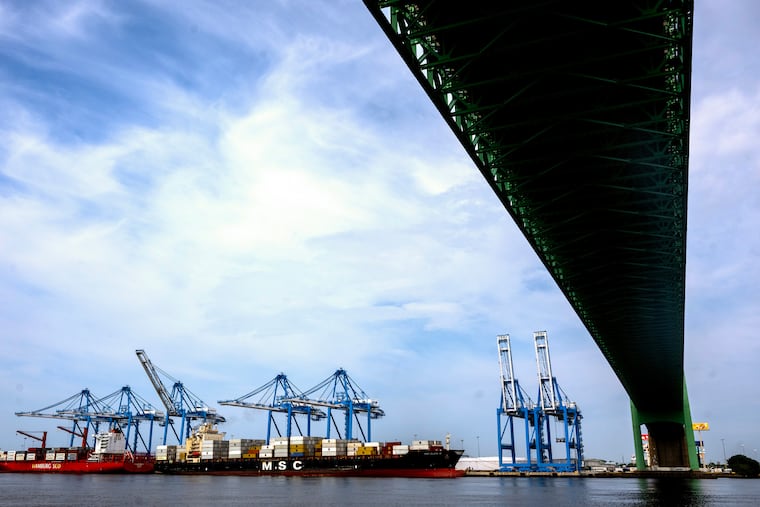
Philly port undergoes largest expansion in history, adding more cars, containers, and cranes to enhance operations.
The Port of Philadelphia is poised for a significant expansion that could allow it to double its container cargo capacity and enhance its automobile handling capabilities by accommodating over 100,000 additional vehicles. This ambitious project has garnered the commitment of Pennsylvania Governor Josh Shapiro, who recently announced a 1 million investment from state funds to support the development. The funding is not only a reflection of local governmental support but also a strategic effort to position Philadelphia as a competitive hub in an increasingly global market for shipping and logistics.
In conjunction with state investment, the expansion plan is expected to attract hundreds of millions more from federal allocations and private sector investments, aiming to create thousands of new jobs within the region. Governor Shapiro articulated the state’s intention to bolster local economic growth while addressing the competitive landscape shaped by foreign tariffs introduced during the past administration, which have affected local manufacturing and logistics costs.
The Port Authority of Philadelphia, known as PhilaPort, describes this initiative as the largest expansion in the port’s history. The project’s funding sources are diverse: 1 million from state borrowings, 6 million from federal grants—some of which were announced during the previous presidential administration—and at least 0 million anticipated from private investors, including significant contributions from Holt Logistics Corp. and Glovis America.
Currently, PhilaPort supports 8,000 direct jobs, including those of dockworkers, alongside an additional 4,000 jobs in related industries. The expansion is projected to generate around 6,000 new direct jobs and contribute an estimated million in annual tax revenues to state and local governments.
Officials indicated that the new investment would specifically target enhancing the port’s capacity to handle an increased volume of cargo types, including automobiles, petroleum products, paper, and pharmaceuticals, which have seen a surge in demand. In fact, last year, the port processed a record 889,000 container units and approximately 250,000 automobiles.
The expansion strategy includes key projects within the southern port district, particularly at Southport, where two new berths are planned to facilitate ship docking directly at this significant terminal, minimizing congestion and maximizing cargo efficiency. The proposed development is also expected to increase the operational space for cargo processing, responding to the growing needs of the shipping industry.
As plans materialize, PhilaPort remains committed to leveraging its assets and strategic partnerships to fuel further growth and economic revitalization in the region. The timeline for the expansion is aggressive, with initial phases slated to begin shortly, setting the stage for a transformative period in Philadelphia’s port operations.
The strategic vision behind this investment reflects an evolving landscape for the competitive maritime industry, highlighting a concerted effort to revitalize the region’s shipping economy in the face of emerging global market demands.


