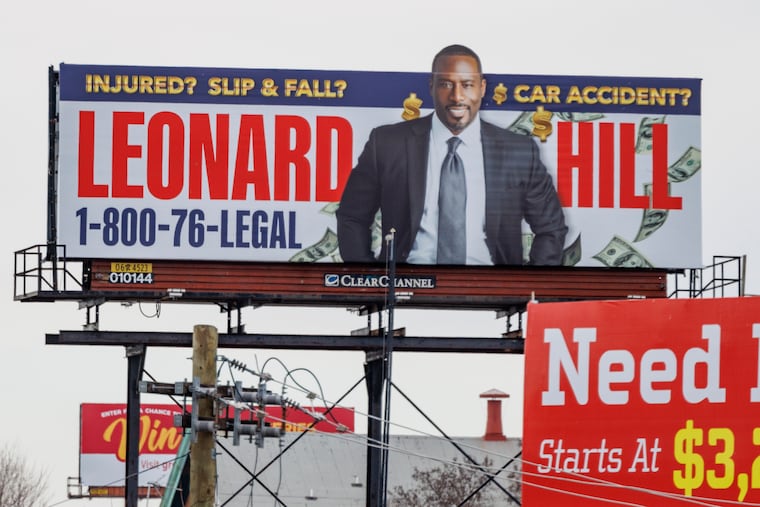
All charges against personal injury attorney Leonard Hill in Center City shooting case have been dropped.
All charges against Leonard Hill, a well-known personal injury attorney, have been dropped in connection with a shooting incident that occurred outside a cigar bar in Center City in 2023. Prosecutors made the announcement on Friday, just hours before Hill was scheduled to appear for a bench trial presided over by Common Pleas Judge J. Scott O’Keefe. Hill, 56, faced serious accusations including aggravated assault, possession of an instrument of a crime, simple assault, recklessly endangering another person, and tampering with evidence.
The decision to drop the charges represents a significant development in Hill’s legal battle. Aggravated assault, the most severe of the charges, carries a potential sentence of up to 20 years in prison if a conviction follows. The resolution also means Hill will not be subjected to the legal repercussions associated with the other crimes he was facing.
Hill had initially sought to resolve his legal issues through the city’s diversion program, a unique opportunity that typically aims to steer lower-risk offenders away from criminal proceedings. Last year, the District Attorney’s Office highly unusually recommended Hill for the program, which could have led to an expungement of his case following successful completion of probation and community service, alongside the surrender of a firearm and a donation to an anti-violence organization.
Despite the diversion’s initial support from the District Attorney, Judge William Austin Meehan Jr. denied the request, asserting that Hill’s case did not meet the criteria for such a resolution, which is usually reserved for less serious offenses.
The incident that precipitated these charges unfolded when Hill and a bar manager attempted to intervene in a situation where a woman was allegedly being harassed by a male patron. The altercation escalated outside the Ashton Cigar Bar on Walnut Street, leading Hill to draw his weapon and discharge it during the confrontation. The shooting occurred as the man tried to flee, resulting in a gunshot wound to his calf.
Legal representatives for Hill argued that he acted in self-defense, claiming the injured man was brandishing a knife during the incident—information that was notably absent from the initial arrest documentation. Hill’s defense described his actions as a split-second decision made in response to what he perceived as a dangerous situation.
Critics of the prosecution’s decision to offer Hill diversion have voiced concerns about perceived disparities in how justice is administered, particularly regarding socioeconomic status. Keisha Hudson, leader of the Defender Association of Philadelphia, expressed skepticism about the fairness of the diversion offering, highlighting that such opportunities are rarely extended to defendants without financial resources.
Despite the prosecutor’s backing for diversion and the recent conclusion of the case, the incident raises ongoing questions about the complexities of self-defense claims and the societal implications of wealth in navigating the legal system.