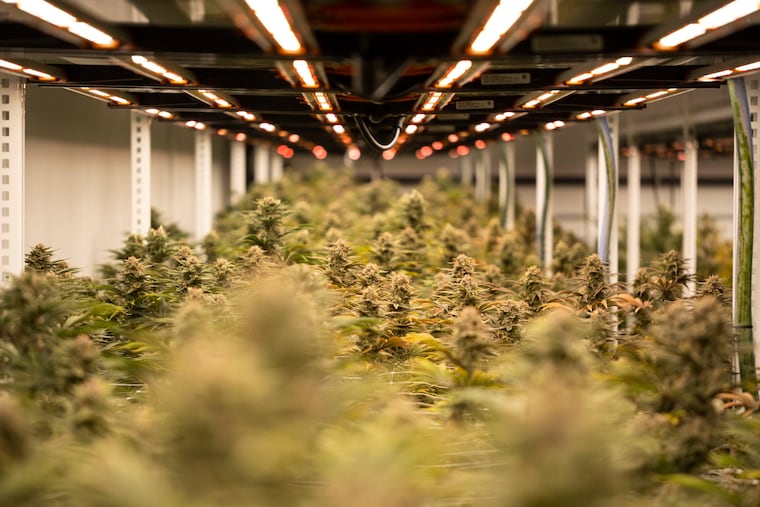
Bankrupt cannabis company terminates 86 employees at Vineland cultivation sites.
Two cannabis cultivation facilities in South Jersey, operated by multistate company Cannabist Company, are set to close on October 11, 2023, resulting in the layoff of 86 employees. These locations, situated at 17 W. Park Ave. and 1560 N. West Blvd. in Vineland, are significantly impacted as the company initiates a Chapter 15 bankruptcy filing. According to a Worker Adjustment and Retraining Notification (WARN) submitted to the state, this closure will affect nearly all cultivation and manufacturing personnel.
The Cannabist Company cited “regulatory, industry, and financial challenges” as the primary factors contributing to a severe liquidity crisis, which has left it unable to meet financial obligations. The company, however, did not respond to inquiries regarding the situation.
Founded as Colombia Care in Massachusetts in 2012, the Cannabist Company rapidly expanded to operate 40 dispensaries and 14 cultivation and manufacturing facilities across ten states, including New Jersey and Delaware. The New Jersey dispensaries were among the first to sell adult-use cannabis following legalization in 2022. On the inaugural day of recreational sales in New Jersey, the Cannabist’s dispensary drew considerable attention, with lines extending around the building.
In light of the closures in Vineland, the Cannabist Company has announced plans to sell its remaining New Jersey operations, which include three retail stores located in Deptford, Vineland, and Mays Landing, to Vireo Growth Inc. for million. This sale will encompass some operations in Colorado, Illinois, Massachusetts, and West Virginia as well.
Prior to these developments, the Cannabist faced substantial financial difficulties, with debts exceeding 0 million owed to lenders and the IRS. The company has also actively closed or sold various operations across different states, including selling its businesses in Virginia for 0 million, Delaware for .5 million, and Ohio dealings for million.
Furthermore, the Cannabist is concurrently navigating a bankruptcy filing in Canada, an unprecedented case in which a U.S. bankruptcy court may recognize a foreign insolvency proceeding, particularly relevant in the context of the federally illegal status of cannabis. As these proceedings unfold, stakeholders within the cannabis industry will be closely monitoring developments, highlighting the ongoing volatility facing businesses in this sector.
This situation underscores the challenges that many cannabis companies are encountering as they navigate a complex regulatory landscape and fluctuating market conditions.