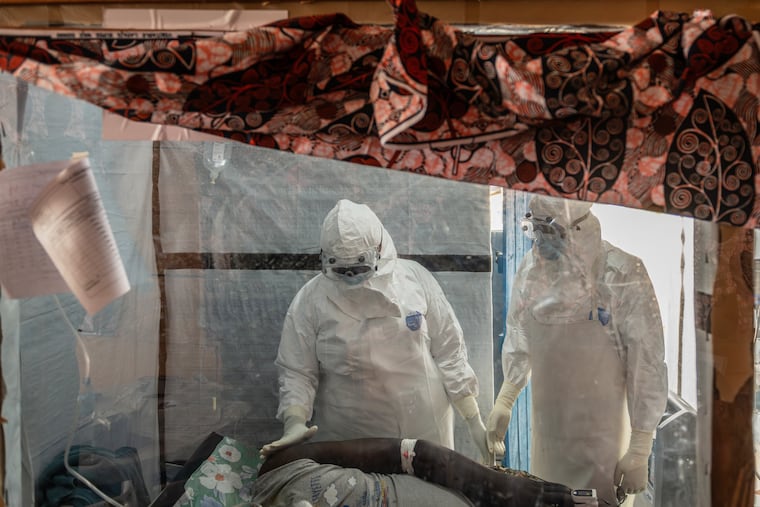
France confirms its first Ebola case as African infections exceed 1,000.
In a concerning development, reported Ebola cases in the Democratic Republic of Congo have surpassed 1,000, raising alarms among health officials regarding the potential for one of the largest outbreaks in recent history. This surge echoes the severe West African outbreak from 2014 to 2016, which claimed over 11,000 lives.
The outbreak, which first emerged in May, has already resulted in more than 250 confirmed fatalities across the continent. Recently, French health officials reported the country’s first case related to this outbreak: a doctor who contracted the virus during a humanitarian mission in Congo. Currently, the medical professional is receiving treatment in a specialized facility and is said to be in stable condition, as confirmed by the French Health Ministry.
The World Health Organization noted that this outbreak is marked by the highest number of confirmed cases recorded within the initial month among all Ebola outbreaks on the continent. Since the Ebola virus was identified in 1976, there have been 17 notable outbreaks, encompassing three identified strains. The Bundibugyo strain, responsible for the current outbreak, has previously only appeared in Uganda in 2007 and Congo in 2017, without any specific treatment or vaccine available.
Health experts express alarm at the current outbreak’s scale and geographical spread. The Bundibugyo strain’s diagnosis presents significant challenges due to the absence of a specific testing kit, resulting in swift, undetected transmission. The virus has heavily impacted the eastern provinces of Congo, particularly Ituri, which has seen nearly 1,000 confirmed cases. Neighboring Uganda has reported 20 infections and two related deaths.
Compounding the crisis, misinformation and distrust surrounding the virus have hampered response efforts. Many individuals infected with Ebola have refused treatment, complicating contact tracing efforts. Instances of violence against health workers during response efforts have also been reported, as community members express skepticism about the legitimacy of the outbreak.
Recent confrontations have seen health workers attacked while attempting to sanitize homes of individuals who have succumbed to the virus, illustrating the challenges faced by health authorities. Additionally, a lack of adherence to health guidelines, such as proper burial practices, poses further risks of viral spread. Conditions in refugee camps, where overcrowding and inadequate sanitation are prevalent, exacerbate fears that the outbreak may escalate.
The ongoing violence in the eastern regions, attributed to conflict including attacks by the Allied Democratic Forces, continues to undermine public health stability. As a result, some individuals are reluctant to seek medical help for fear of contracting Ebola in healthcare facilities.
International aid efforts are currently underway, with the United States contributing 5 million to address the Ebola outbreak. Experts emphasize that enhanced measures are critical to curb the virus’s spread. Strategies to decentralize testing and improve contact tracing are essential next steps in addressing the escalating crisis.
In light of the situation, public health officials advocate for immediate, decisive actions to combat the outbreak, as the consequences of inaction could lead to further loss of life and a prolonged health crisis in the region.