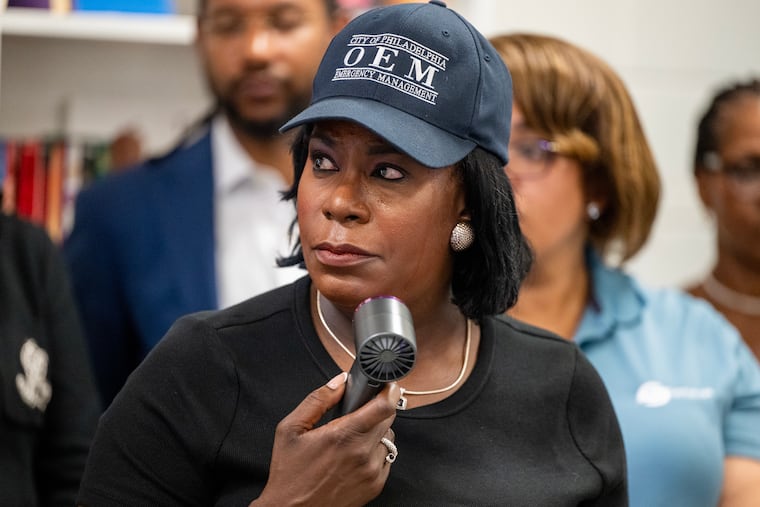
Mayor Cherelle Parker urges city workers on strike to recognize her efforts, but progress remains stalled.
As negotiations between Philadelphia’s city administration and the American Federation of State, County and Municipal Employees (AFSCME) District Council 33 continue to falter, city workers have now entered their second week of striking, marking Philadelphia’s first significant labor dispute of this nature in nearly four decades. The strike commenced six days ago when over 9,000 members of DC 33 walked off their jobs after negotiations for a new contract failed to yield an agreement satisfactory to union leaders.
Mayor Cherelle L. Parker’s attempts to reconcile differences with union president Greg Boulware came to a head just before midnight last Monday, as she sought to address Boulware’s demands for a 5 percent annual raise for the union members. Instead of meeting this critical demand, Parker proposed her Housing Opportunities Made Easy (H.O.M.E.) initiative, which gained approval from the City Council in June during budget negotiations, as a means to improve conditions for city workers. Parker asserted that her administration developed various housing programs with the needs of union members in mind.
Despite these efforts, Boulware criticized the administration’s tactics, emphasizing that housing initiatives should not be considered alternatives to their wage negotiations. He argued that previous raises had to be fought for and should not be conflated with other benefits or programs. The union has organized support for their strike, encouraging members of the community to donate food and water and establishing a fundraising portal for their strike fund.
Parker’s last contract offer involved a three-year deal that included annual raises of 2.75%, 3%, and 3%, effectively totaling 8.75%. However, in her communication, Parker has referred to an overall potential increase of 13.75% when previously secured raises are factored in, claiming this would represent substantial progress during her administration.
Critics, including Boulware, argue that the city has yet to offer significant concessions for the current contract. While Parker continues to stress her administration’s commitment to supporting city workers and housing initiatives, union leaders remain unimpressed, insisting that the increase from last year’s negotiation should not be used as leverage for the current discussions.
Parker’s H.O.M.E. initiative seeks to invest 0 million into enhancing housing programs aimed at assisting working-class families. This initiative, however, does not exclusively benefit district union members and has sparked discussions about perceptions of who should be prioritized in city policies.
Expectations for progress seem dim as no formal negotiations occurred over the past weekend, and there remains a looming concern about the duration and impact of this strike. Union representatives anticipate that the walkout could extend longer as they mobilize for sustained support. In this context, national AFSCME president Lee Saunders is expected to visit Philadelphia to further lend support to striking members.
As this dispute unfolds, the underlying issues reflect broader challenges in labor relations, municipal workforce negotiations, and the social fabric of Philadelphia. The impasse not only presents difficulties for city operations but also highlights the precarious balancing act at the intersection of labor rights, municipal governance, and economic equity.