Philly DA Larry Krasner accuses Police Commissioner of spreading misinformation regarding alleged cop killer’s previous murder case.
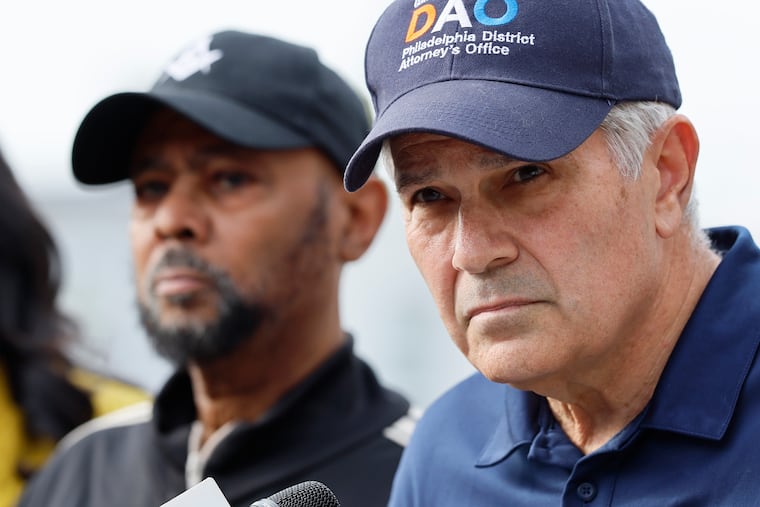
District Attorney Larry Krasner publicly criticized Police Commissioner Kevin Bethel on Friday, alleging that Bethel disseminated misinformation regarding the recent acquittal of Eric Lewis, a man previously charged in connection with the murder of Christopher Williams in 2019. The intense back-and-forth between the District Attorney and the Commissioner has become a focal point of discussion amid the tragic backdrop of the killing of Police Officer Shane Seiber. Lewis is currently accused of Seiber’s death and the serious wounding of Officer Hector Rodriguez III.
Krasner’s allegations stemmed from a video he released, in which he asserted that the failures stemming from a flawed investigation had ultimately led to Lewis’s acquittal earlier this year. He claimed that misconduct by a former police officer, who worked on the Lewis case, directly contributed to the serious ramifications now faced by the Philadelphia Police Department.
The District Attorney emphasized that his office exerted every effort to secure a conviction against Lewis, but ultimately the case was compromised by alleged “arguably criminal” actions from those involved in the investigation. Krasner has indicated he is weighing the potential for criminal charges against the former officer and detective.
Much of Krasner’s press conference revolved around the disagreements between him and Bethel, with Krasner accusing the Commissioner of failing to facilitate communication regarding the current crisis following Officer Seiber’s death. He expressed disappointment at what he characterized as a breakdown in collaboration among the city’s leadership.
Bethel had previously condemned Krasner’s timing and content in assessing blame in the aftermath of Seiber’s tragic death. He described Krasner’s actions as “absolutely unacceptable” during a press conference, noting that his focus remains on supporting both Seiber’s grieving family and Officer Rodriguez as he recovers from his injuries.
Krasner, in turn, cited a communication that emerged from Bethel’s “inner circle” suggesting that reasons had been assigned for Lewis’s acquittal. He contended that failure to properly investigate the case led to its unraveling and defended his choice to address the media directly rather than privately confront Bethel.
Past investigations into the Lewis case revealed critical gaps, particularly regarding the actions of Detective Laura Harris, who had been criticized for failing to adequately secure necessary evidence. After Lewis’s acquittal, Judge J. Scott O’Keefe reported Harris to the Internal Affairs Unit for her handling of the investigation.
As the situation continues to evolve, Krasner maintains that the prosecutors involved should not be expected to remedy the failures caused by those who mishandled the investigation. In the face of increasing scrutiny, he reiterated that he is prepared to address the fallout publicly to ensure transparency and accountability.
This ongoing dispute between the Philadelphia District Attorney’s Office and the Police Department highlights deeper systemic issues in law enforcement and judicial processes, particularly as they relate to the serious implications of police conduct and the accountability for criminal investigations. As both sides navigate this tense environment, the focus remains on the families affected and the broader implications for public safety.