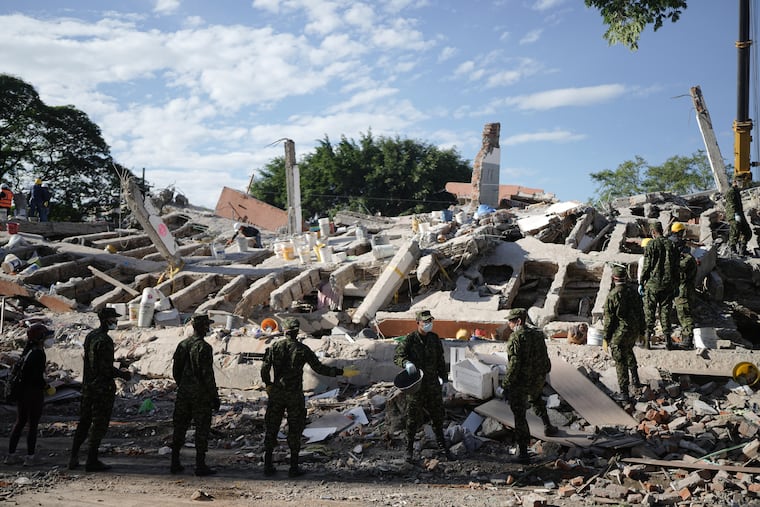
Rescuers urge silence near earthquake rubble in Colombia as chances of survival decrease.
CALI, Colombia – Rescue operations continue in the aftermath of a catastrophic earthquake that struck Colombia earlier this week, claiming the lives of over 270 individuals and leaving hundreds more unaccounted for. The 7.4-magnitude quake, the most powerful to hit the country in the 21st century, struck on Monday, prompting urgent calls for silence from rescuers as they conducted desperate searches for any signs of life buried under the rubble.
Throughout the rescue efforts, teams have been engaged in a race against time, with the initial 72 hours deemed critical for locating potential survivors. While aid professionals acknowledge the challenges of this window, certain circumstances—such as access to water and food—can extend the window of hope for those trapped. Volunteers like 25-year-old Daiana Rojas have been actively participating in these efforts in Cali, one of the most severely impacted cities along with Pereira, Manizales, and Quibdó. Rojas remains hopeful despite the tragedy, having heard promising sounds from beneath the debris.
The mayor of Cali, Alejandro Eder, underscored the urgency of the situation on Wednesday, declaring that the forthcoming hours are crucial for finding any remaining survivors. However, officials also expressed concerns as the focus is gradually shifting towards the grim task of recovering the deceased. With more than 72 hours elapsed since the quake, authorities have begun the difficult transition from rescue to recovery operations.
The latest reports indicate that the death toll has risen to 273, with more than 3,800 individuals injured, alongside significant structural damage—nearly 12,600 homes were destroyed, and over 74,800 others reported damaged. These numbers come from David Santiago Tamayo, the director of Colombia’s National Unit for Disaster Risk Management.
In light of the devastation, Colombia’s new president, Abelardo de la Espriella, is facing significant pressure to respond effectively to the crisis and coordinate the relief efforts. While official sources report nearly 500 people missing, independent databases estimate the figure to be upwards of 4,200. Approximately 25,800 families have been affected by the disaster, highlighting the extensive impact on communities.
International support has begun to arrive, with a group of rescuers from the Los Angeles County Fire Department joining efforts in the region, and various nations—including Peru, Mexico, and Brazil—offering assistance. Additionally, financial commitments have followed suit, with the United Arab Emirates pledging a million donation, and the South American Football Confederation contributing million for reconstruction efforts.
The earthquake struck less than two months after Venezuela experienced a series of back-to-back tremors, amplifying comparisons between the two nations’ disaster response mechanisms. While Colombia activated emergency measures quickly, the situation in Venezuela was marked by delayed governmental responses, demonstrating the broader implications of political and institutional strengths in crisis scenarios.
As Colombia continues to navigate this devastating chapter in its history, the efforts to recover and rebuild will require both national resilience and international cooperation in the days and weeks to come.