
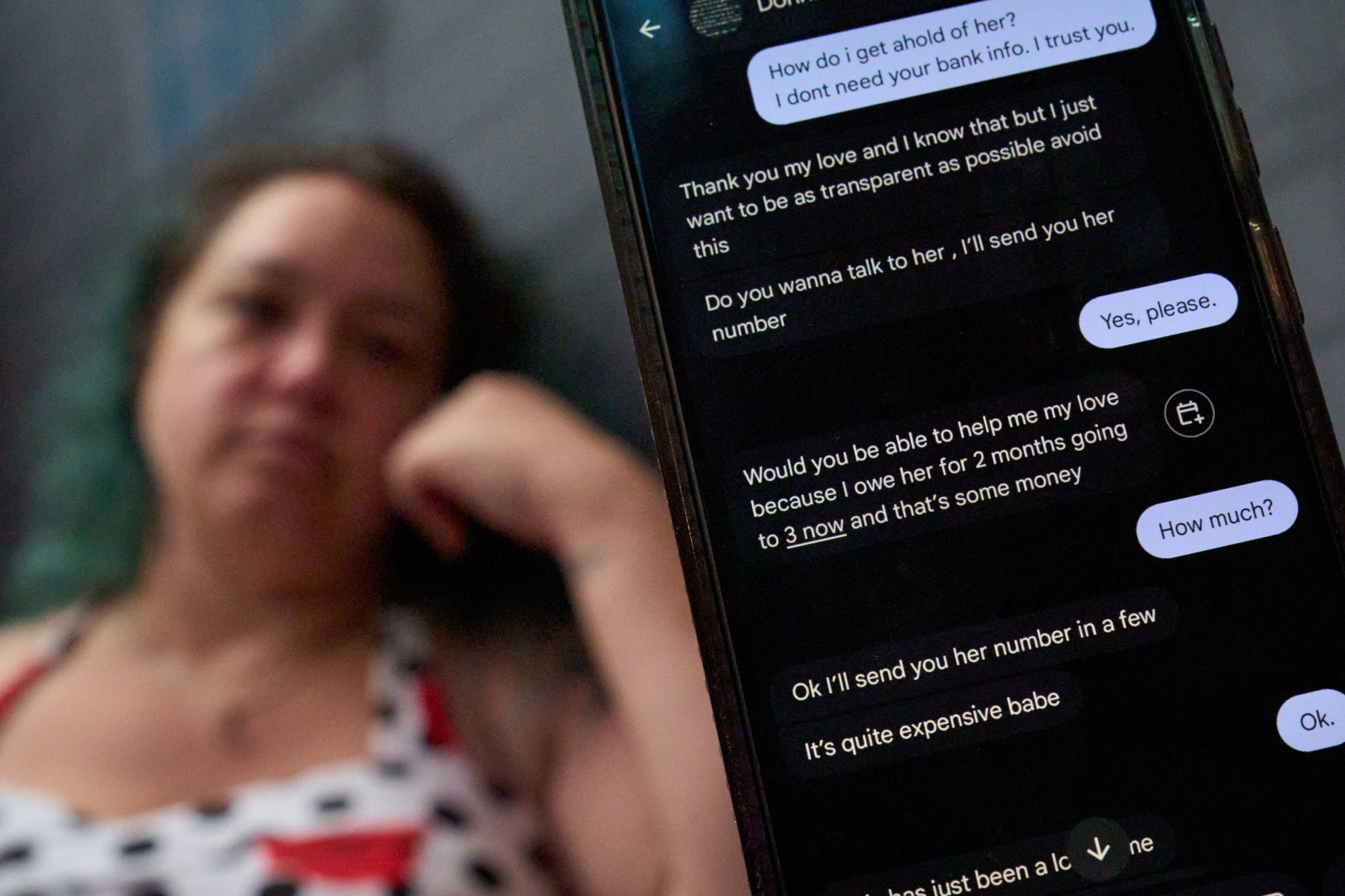
Romance scams examined: understanding emotional connections to fictional partners despite awareness of their falsehood.
In recent months, a significant increase in romance scams across the United States has garnered attention, particularly during a rainy afternoon in August when Jean Booth found herself anxiously awaiting a message from her boyfriend, Donnie. Despite her anticipation, no word arrived, a fact that initially unsettled her. While Donnie was expected at the airport within hours, the two had never met in person, nor had they spoken over the phone. As minutes turned into anxiety-ridden hours, Jean’s phone remained silent.
When he finally did reach out, it was through a WhatsApp message expressing his inability to secure a plane ticket, alleging that he was in a dangerous situation and, once again, requesting financial assistance. This heartbreaking plea left Jean in tears, parked in a vast parking lot in suburban Virginia.
The plight of individuals like Jean highlights a disturbing trend in which romance scams have gained momentum. According to data compiled by the Federal Trade Commission (FTC), more than 49,000 Americans reported losing approximately .3 billion to romance scams in the previous year. This statistic signifies a staggering increase of at least 14% compared to the previous year.
A contributing factor to this rise in incidents may be the social isolation exacerbated by the COVID-19 pandemic and subsequent lockdowns. A pioneering study by the World Health Organization, anticipated to be published in 2025, revealed ongoing loneliness among individuals worldwide, with estimates indicating that between one in six and one in two people experience feelings of loneliness.
The human inclination towards relationships and social connections is deeply rooted, with neuroscientific studies suggesting that our brains are biologically predisposed to seek companionship for survival. As psychologist Julianne Holt-Lunstad articulated, the need for social connection is akin to basic biological necessities such as food and water. When these connections are lacking, the void may lead individuals to engage in potentially harmful pursuits, including those that result in romantic exploitation.
Moreover, the emotional toll inflicted by these scams goes beyond financial loss. Statistics show that many victims are acutely aware of the manipulation they face. According to Ally Armeson, executive director of FightCybercrime.org, the individuals she counsels often grapple with a profound internal conflict—that of recognizing their entrapment while perceiving the unbearable loneliness of solitude outside their situation.
The compounded feelings of guilt, shame, and social stigma can exacerbate the loneliness many of these victims initially sought to escape. Tragically, some individuals have even contemplated ending their lives due to the despair stemming from their experiences. They often find themselves caught in a heartbreaking cycle of belief, having invested their emotions in a fictitious love, only to later confront the stark reality of betrayal when the illusion shatters.
Efforts to combat this alarming trend must intensify, focusing not only on preventive measures but also on providing support and resources for victims who are left in the wake of these manipulative schemes. As this issue continues to evolve, understanding the emotional landscape of romance scams becomes indispensable in fostering resilience and providing healing avenues for those affected.
This report underscores the urgent need for awareness and preventative measures as romance scams become an increasingly prevalent threat, leveraging technology and human vulnerability to exploit unsuspecting individuals.


