Supreme Court hears death row case addressing racial bias in jury selection with notable justices involved.
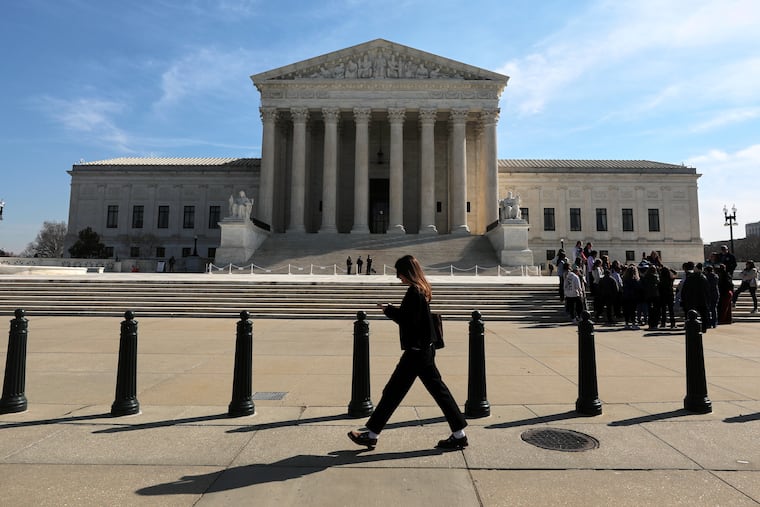
The Supreme Court is poised to consider a significant case that revisits issues of racial discrimination in jury selection, as it hears the appeal of Terry Pitchford, a Black death row inmate from Mississippi. Oral arguments are scheduled for Tuesday, centering around claims of systematic bias that occurred during Pitchford’s original trial.
The trial, which concluded in 2004, was marred by the actions of Doug Evans, a now-retired prosecutor notorious for dismissing Black jurors. In Pitchford’s case, Evans managed to exclude all but one Black juror from the jury pool, raising severe concerns about the fairness of the trial. Judge Joseph Loper presided over the proceedings and allowed these jury selections to stand, a decision the Mississippi Supreme Court subsequently upheld.
This case echoes a previous landmark ruling involving Curtis Flowers, who had his death sentence overturned by the Supreme Court in 2019 due to what Justice Brett Kavanaugh described as a “relentless, determined effort to rid the jury of Black individuals.” Notably, seven of the current justices participated in that ruling, which could influence their approach to Pitchford’s appeal.
In its recent history, the Supreme Court has largely been unsympathetic to last-minute defenses in capital cases, illustrated by its recent decision to deny the appeal of Texas inmate Rodney Reed, who sought to introduce evidence he claims would prove his innocence. However, the court’s agreement to hear Pitchford’s case suggests a shifting focus towards addressing racial bias in the judicial system, a concern increasingly acknowledged even among conservative justices.
Pitchford’s conviction stems from his involvement in a robbery that led to the killing of Reuben Britt, owner of Crossroads Grocery in Mississippi. The case has navigated legal challenges for two decades, culminating in U.S. District Judge Michael P. Mills’s 2023 ruling, which overturned Pitchford’s conviction based on the inadequacy of the trial judge in evaluating the legitimacy of juror dismissals. However, the Fifth U.S. Circuit Court of Appeals reversed that decision.
Central to the Supreme Court’s review will be the question of whether Pitchford’s legal team sufficiently objected to the jury selection process and the reasonableness of the state Supreme Court’s findings. Pitchford’s attorneys argue for a retrial or his release if the Supreme Court rules in his favor. Meanwhile, Mississippi Attorney General Lynn Fitch has defended the state’s position, asserting that the actions taken by Evans did not constitute inappropriate discrimination.
This high-stakes case highlights ongoing concerns regarding equality in the American legal system, particularly in death penalty cases where the implications of racial bias can be profound. The outcome could have significant repercussions not only for Pitchford but also for broader judicial practices surrounding jury selection in the United States. As the Supreme Court hears arguments, the legal community and the public alike are left to consider the enduring impact of race in America’s criminal justice system.
Media News Source.