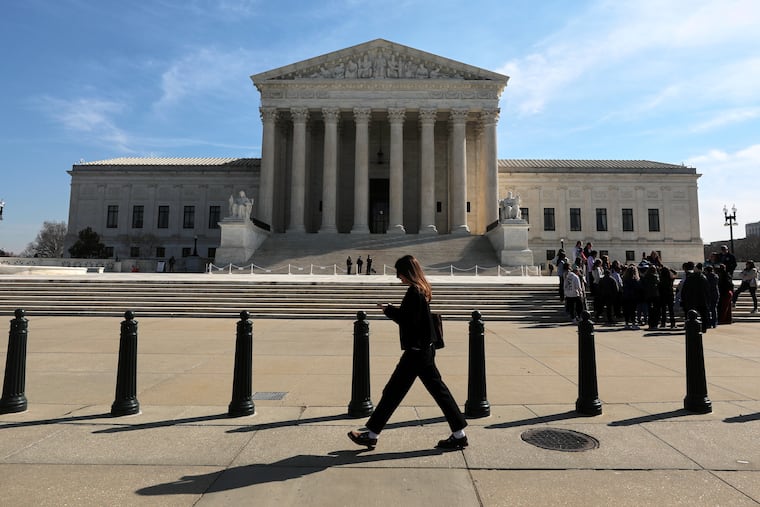
Supreme Court to hear death row case addressing racial bias in jury selection involving notable justices.
In a significant legal case set to be heard by the Supreme Court, the focus is on allegations of racial discrimination in the jury selection process related to the conviction of Terry Pitchford, a Black death row inmate from Mississippi. The arguments are scheduled to unfold on Tuesday, highlighting the ongoing scrutiny of jury composition and the judicial system’s treatment of minority defendants.
At the core of the case is Doug Evans, a retired prosecutor known for his history of dismissing Black jurors during trials. During the proceedings against Pitchford, Evans managed to remove all but one Black juror from the jury pool. This practice has raised serious concerns about racial bias within the judicial process. The trial judge, Joseph Loper, permitted these exclusions, and the state Supreme Court subsequently upheld Pitchford’s conviction.
The current legal landscape reflects the Supreme Court’s evolving stance on issues of racial discrimination, especially within the context of capital cases. In a prior landmark ruling involving Curtis Flowers, also prosecuted by Evans, the Court overturned Flowers’ conviction due to an “intentional effort to exclude Black jurors.” Seven of the justices presiding at that time are still on the bench, and their historical decisions may influence the outcome of Pitchford’s appeal.
In recent years, the Supreme Court has been less receptive to last-minute appeals by defendants facing execution, as evidenced by a recent denial of an appeal from Texas death row inmate Rodney Reed, which drew dissent from three liberal justices who believed Reed should be allowed to present potentially exonerating evidence.
The underlying issue in Pitchford’s case revolves around the state Supreme Court’s ruling on whether Pitchford’s defense team adequately challenged the juror dismissals. The prosecution had aimed to eliminate several Black jurors based on questionable reasoning, leading to an eventual appeal by Pitchford, who was convicted for his involvement in a fatal robbery in 2004.
The case has now traversed the court system for two decades. In 2023, U.S. District Judge Michael P. Mills overturned Pitchford’s conviction, arguing that the trial court failed to provide the defense with sufficient opportunity to contest the biased juror dismissals. However, this ruling was reversed by a unanimous panel from the 5th U.S. Circuit Court of Appeals.
As the Supreme Court prepares to hear Pitchford’s case, the justices will consider whether his legal team conducted enough of an objection to the trial judge’s decisions and whether the state court acted reasonably in its assessment of those objections. If successful, Pitchford could potentially be released or retried, and the case is emblematic of broader concerns regarding racial bias in the judicial system.
Mississippi Attorney General Lynn Fitch has defended the state Supreme Court’s decision, asserting that the juror dismissals were not racially motivated. The legal landscape surrounding this case continues to evolve, encapsulating critical discussions about race, justice, and the integrity of the legal process in America.
This case is an important reflection of ongoing efforts to address systemic bias within the criminal justice system and will be closely monitored as it progresses through the Supreme Court. The implications of the Court’s ruling could resonate widely, influencing not only Pitchford’s future but also the broader discourse on jury selection and racial discrimination in legal proceedings.
Media News Source