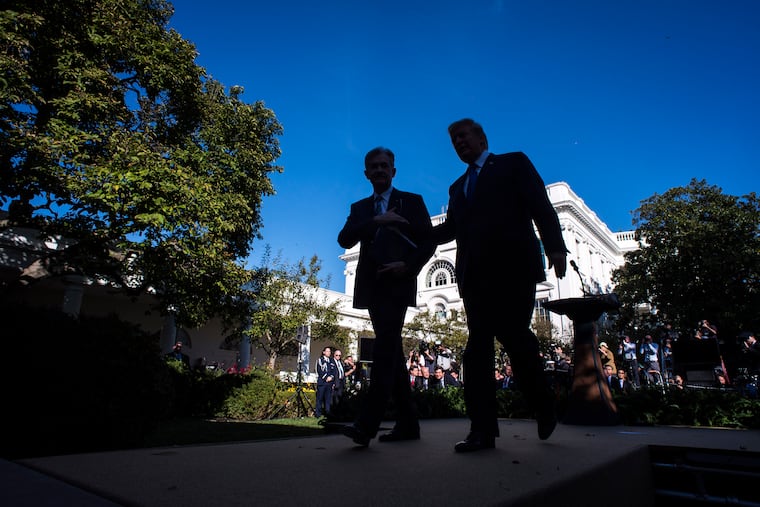
Trump Calls for Lower Interest Rates; Examining the Federal Reserve’s Next Steps
President Donald Trump has publicly called for significant reductions in interest rates, seeking to influence the Federal Reserve’s decision-making process. While his proposals may align with immediate economic interests, experts caution that such actions could yield unintended consequences.
Current trends indicate a moderation in job growth, a reality acknowledged across economic discourse. The reasons behind this slowdown, however, remain contentious. Many economists attribute the softening labor market to uncertainty surrounding tariff impacts and the accelerating integration of artificial intelligence (AI) in the workforce. These dynamics play a significant role in shaping the expectations that inform business hiring, investment decisions, and consumer spending behaviors. Generally, when individuals and businesses feel optimistic about the economy, they tend to invest and hire more. Conversely, uncertainty leads to a more cautious approach.
Amidst this backdrop, business hiring patterns show signs of hesitance. While job openings have decreased and modest job gains persist, layoffs have not surged, indicating that companies are cautious yet not in crisis mode. This suggests a wait-and-see approach among employers as they seek clarity regarding future economic conditions.
Another critical factor affecting job creation is the swift adoption of AI technologies, which fundamentally alter the demand for human labor. As businesses leverage automation and AI, the need for traditional job roles may decline, inhibiting robust job growth. Economists suggest that addressing these uncertainties—specifically those related to tariffs and their broader economic implications—will be vital for revitalizing job creation.
The debate surrounding interest rates adds further complexity. Some analysts argue that elevated rates are the primary hurdle to economic growth, advocating for significant cuts as a remedy. However, skepticism remains regarding the effectiveness of this strategy. The Federal Reserve’s mandate is to maintain maximum employment while ensuring stable prices. Currently, the unemployment rate stands at 4.3%, which many economists consider close to full employment. Reducing interest rates in this environment risks igniting inflation, a concern that has ramifications for long-term economic stability.
Furthermore, the implications of tariffs on inflation are multifaceted. While some believe their impact will be transitory, the reality may be far more persistent, complicating the Fed’s task. The current geopolitical climate and size of recent tariff hikes could mean prolonged inflationary pressures, which the Fed must navigate carefully.
Looking ahead, the Federal Reserve is expected to deliberate on potential rate cuts. However, analysts urge caution, suggesting that such reductions will not address immediate challenges posed by tariffs, uncertainty, or technological shifts. A hasty and substantial reduction could call the Fed’s independence into question, potentially undermining both investor confidence and economic growth.
In summary, while pressure mounts for the Federal Reserve to react to calls for lower interest rates, the broader economic indicators suggest a more cautious approach is warranted. Sustainable economic growth will likely hinge on effectively managing uncertainties related to tariffs and technological advancements, rather than merely adjusting interest rates. For now, careful deliberation remains essential as the Fed contemplates its next steps in a complex economic landscape.