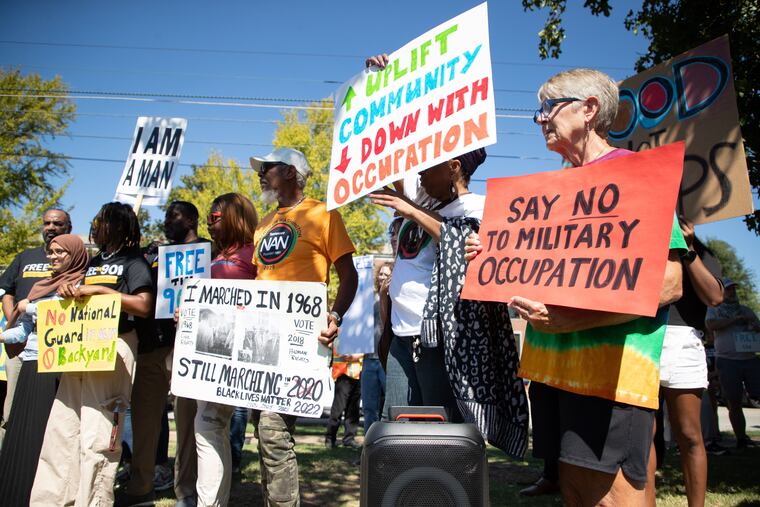
Trump tests the limits of state authority amidst ongoing legal issues, rather than addressing crime concerns.
In recent discussions surrounding the deployment of the National Guard in American cities, it becomes crucial to analyze the broader implications of such actions by the executive branch. The motivations behind President Donald Trump’s decision to utilize military forces in urban areas have sparked extensive debate among political analysts and citizens alike. Far from being merely a response to crime rates or socio-political dynamics, this move represents a significant exploration of the limits of federal power and its implications for American federalism.
President Trump’s approach raises concerns about potential authoritarian shifts within the United States. The technique resembles that of historical strongman leaders who, under the guise of restoring order or enacting law and order, gradually erode the foundations of democracy. This strategy subtly undermines the established norms that delineate the military’s role within civil society.
The Constitution, along with a wealth of judicial precedent, has always been skeptical of military involvement in domestic affairs. The Posse Comitatus Act serves as a critical barrier against such executive overreach, establishing a necessary separation between civilian governance and military authority. Yet, this principle appears at risk as Trump continues to challenge its limits, treating constitutional restraints as mere obstacles rather than foundational tenets.
The spectacle accompanying these military deployments is as significant as the decision itself. The operational display—complete with armored trucks, military uniforms, and illuminated urban landscapes—transcends policy; it evolves into a narrative designed to resonate with segments of the public. Authoritarianism in contemporary America does not wear an overtly oppressive mask; instead, it adopts familiar symbols and patriotic rhetoric, making it more insidious and challenging to oppose.
Moreover, the historical context regarding the deployment of state force within Black communities must not be overlooked. The legacy of military presence in these contexts extends from the antebellum era to modern civil rights milestones, complicating the discussion surrounding state intervention today. Nonetheless, the core issue remains: this is a test not just of racial justice, but of public tolerance for military involvement in governance.
Conservatives, who historically champion limitations on government power, should find this trend particularly alarming. The principles of restraint and respect for constitutional order ought to resonate deeply within conservative philosophy. However, the current political climate has seen a departure from these foundational beliefs. The implications of this shift are profound and warrant substantial scrutiny.
As society considers the ramifications of a militarized political landscape, it begs critical questions about the future of governance. What if, under the pretext of emergency or contention, future administrations attempt to deploy military resources in civilian contexts? The precedents established today could hinge on the acceptance of such military encroachment into civic life.
Ultimately, the focus should not solely be on law enforcement or public safety. Instead, the underlying concern revolves around safeguarding the constitutional structure that separates military authority from civilian governance. The ongoing discourse encapsulates a broader battle for the essence of American democracy—a challenge essential to the preservation of the republic’s core values.
Media News Source